Hair Salon for Damaged Hair Houston: Repair Plan Guide

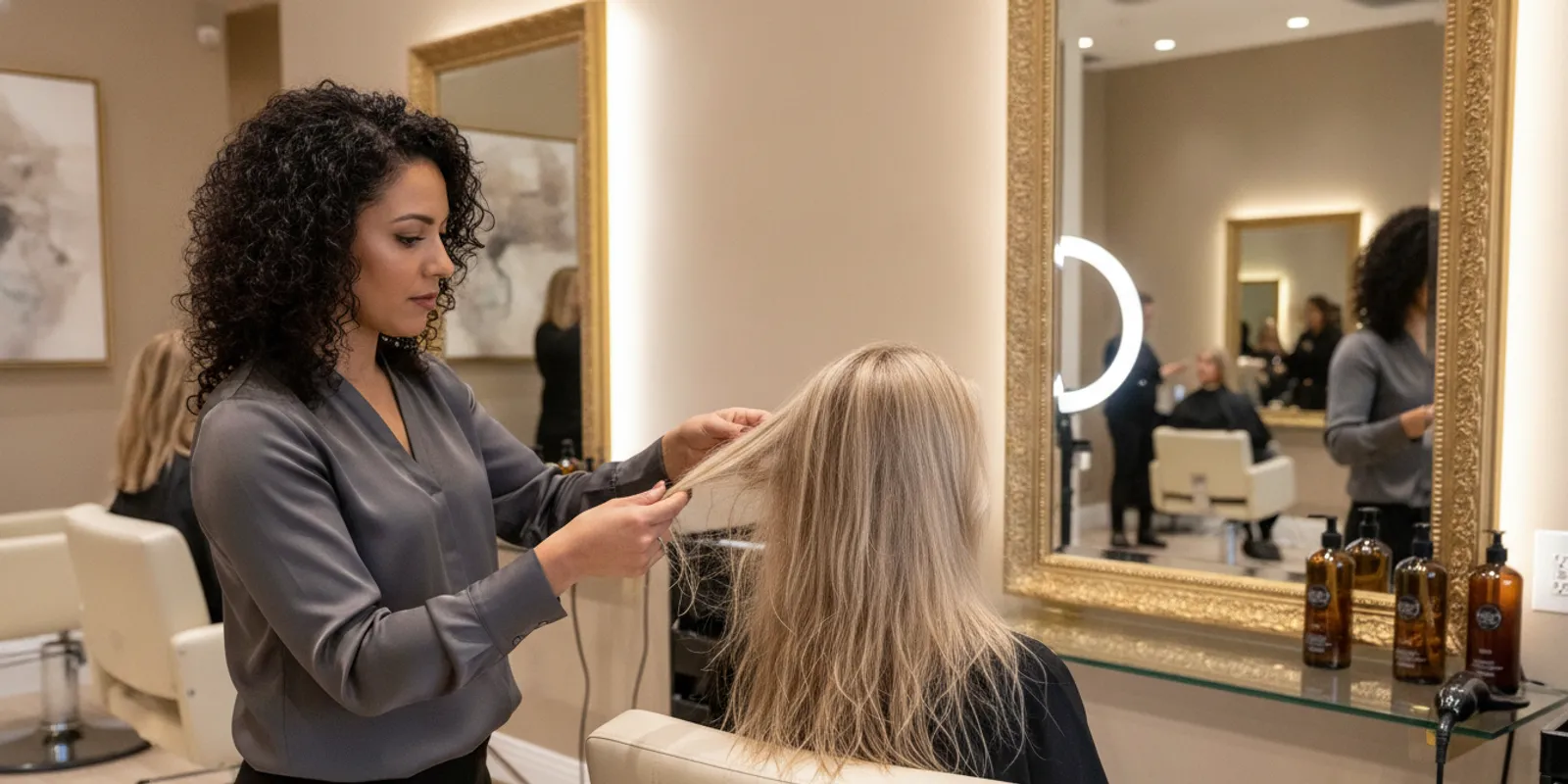
Stylist assessing the condition of a client's hair in a luxury Houston salon

Brittle ends, dull color, and hair that tangles after every wash are reasons to slow down, not to book the biggest service on the menu. If you want a hair salon for damaged hair Houston residents can trust, start with an assessment. Ask what the hair can handle now, what should wait, and what a few months of care can change. One appointment cannot undo overlapping color, heat, or daily wear. A clear plan can still make the hair easier to manage.

Schedule a virtual consultation

What should a Houston salon for damaged hair assess first?

Dry-looking hair and hair that snaps are not the same problem. Stretchy wet hair, rough ends, uneven color, and hair that only misbehaves after heat can each point somewhere different. A useful visit separates what you notice at home from what a stylist can see in texture, density, porosity, and how the hair responds when it is handled.

Expect questions about recent color, lightening, smoothing, and chemical services, plus swimming, sun, Houston humidity, and tight styles. Home tools and temperatures matter too. So does the goal: keep the length, change the color, add extensions, or simply make mornings easier. A service that suits resilient hair can be too much for hair that is already compromised.

At Bella Rinova, new color clients complete a consultation before a color service is booked. Virtual consultations are also available for complex services and for people who are still deciding. That conversation should name tradeoffs in plain language. Keeping length may mean waiting on a big color change. Wanting smoother styling may mean technique and home care first, not an immediate smoothing service.

A good baseline is specific. Fewer tangles, softer ends, or a shape that is easier to dry beat a vague goal like “make it healthy.” Notice whether the hair feels rough when wet, only after heat, or mainly in humidity. Those details tell a stylist more than the word damaged.

How do you tell whether the hair needs a staged plan?

Some concerns can be addressed in one visit. Others need a sequence so the hair is not asked to do too much at once. Staging is not a delay tactic. It is a way to match each service to the hair you have today.

What you notice. A reasonable first step. What often waits.
Dry, rough ends with stable mid-lengths. Shape the ends and review home care. A major color or lightening change.
Uneven tone on hair that still feels resilient. A consultation about a modest color adjustment. Corrective color beside other chemical work.
Hair that stretches when wet or snaps when dry. Conditioning, gentler handling, and a conservative cut. Extensions, smoothing, or substantial lightening.
Frizz that mainly appears in humidity. Cut, styling technique, and a conditioning plan. Assuming smoothing is the only answer.
Interest in extensions on fine or fragile areas. An extension consult on density and placement. Adding weight before the hair is assessed.

Use the table as a conversation starter, not a diagnosis. Two people can describe the same complaint and need different timing. The point of a staged plan is a visible priority: improve comfort and manageability first, then revisit color, length, or extensions when the hair’s response supports that step.

Why does service history change the recommendation?

Hair keeps a record of overlapping work even when a single appointment went well. Lightening followed quickly by another chemical service, repeated high heat, or several attempts to fix a color can leave the hair less predictable. A stylist needs that timeline before recommending the next service.

Bring dates if you remember them, photos of the hair before and after recent work, and the names of products you use most days. If a previous service felt too tight, too hot, or left the hair unusually tangled, say so. That is useful history, not a complaint to soften.

History also explains why two salons might disagree. One may be looking only at the color you want. Another may be looking at how many processes the hair has already absorbed. The second conversation is the one that protects your options later. Bella Rinova’s hair services include cuts, color, balayage, glossing, keratin smoothing, and conditioning, and the right mix depends on that history.

What should you ask before you book?

A strong consultation answers practical questions, not only “what do you think?” Use the visit to learn how the stylist makes decisions when the hair and the inspiration photo do not match.

  1. Will you assess condition before recommending a service, including density, texture, and recent chemical work?
  2. What would you prioritize at the first appointment, and what should wait?
  3. Which part of this plan has a starting price, and which part is priced after consultation?
  4. What will maintenance look like at home, and when should we reassess?
  5. What result should I not expect from a single visit?

Listen for answers that name limits. “We can refresh the tone and shape the ends now, then revisit lightness later” is more useful than a promise to repair everything. If you are comparing salons, ask each one the same questions and write down the sequence, not just the service name.

How does conditioning fit a realistic plan?

Conditioning can improve softness, slip, and how the hair feels between appointments. It does not rebuild hair that has been heavily processed, and it should not be described that way. At Bella Rinova, a Kérastase conditioning treatment is one tool inside a plan, alongside the cut, the timing of color, and what happens at home with heat and detangling. Current starting prices live on the hair services page and still vary with length, density, and condition.

Ask what the treatment is meant to change at the next wash: easier brushing, less roughness at the ends, or a short-term boost in shine. Then ask what it will not change. Hair that feels coated for a day and tangled again by tomorrow may need a different cut, less heat, or more time between chemical services. Products should be ones the salon actually carries and can explain, such as Kérastase or Shu Uemura, matched to your hair rather than added by habit.

Home care stays simple. Detangle from the ends upward, lower heat where you can, and avoid stacking a new intensive routine on top of an unclear one. If a product is not something Bella Rinova carries or has confirmed, it does not belong in the plan.

How should color change when hair is brittle or overprocessed?

Color is often the appointment people want first, especially with visible roots or a tone that no longer looks like the plan. On compromised hair, the first question is which color change the hair can accept. That may be a gloss, a smaller shift, or a later appointment.

Balayage, highlights, all-over color, and color correction are different amounts of work. A reference photo does not show your starting level, previous formulas, or how porous the hair is. New color clients at Bella Rinova complete a consultation before booking.

The hair menu publishes starting prices for single-process color, partial and full highlights, balayage highlights, and toner or gloss. Read those figures on the hair services page rather than treating a blog as the price list. Final pricing still depends on length, density, condition, and complexity.

Color correction is consultation-based. Uneven bands, unwanted warmth, or a result that drifted from the original goal can take more than one visit. Overlapping lightener on already lightened hair is a common reason to wait. A careful stylist will say which part of the picture can be kept, such as brightness around the face, and which part should be smaller than the photo.

Can a Houston salon for damaged hair still consider extensions?

Sometimes, and only after the hair is assessed. Extensions add weight and a maintenance schedule. They are a poor first step when the hair already snaps, feels sparse in the placement area, or is in the middle of a corrective color plan. Bella Rinova works with Invisible Bead Extensions, Great Lengths, Bellami, Covet & Mane, and Sax & Ro. The method and the amount of hair should be chosen in consultation, not from a photo of someone else’s density.

A useful extension consult covers where the hair is strongest, how you wear it during the week, and how often you can return for maintenance. Extension pricing is consultation-based. If the recommendation is to wait, that is part of responsible planning. You can read the salon’s hair extension services before the visit so the conversation starts with method and upkeep, not only length.

When should a smoothing service wait?

Keratin and other smoothing services can reduce frizz and cut daily styling time. They are still chemical services, so they belong in the same careful sequence as color. Bella Rinova lists keratin treatment with a starting price that depends on length, density, and condition. Confirm the current figure on the hair services page or in consultation. The goal might be maximum smoothing or lighter frizz control. Either way, the hair’s recent chemical history comes first.

Be cautious if the hair was lightened recently, feels gummy when wet, or is already booked for a color correction. Humidity frizz alone is not proof that smoothing is the next step. A different cut, a conditioning treatment, and a lower-heat styling routine can be the better first month. Ask how the service interacts with your color and what the grow-out and home care will require.

How does the haircut support the rest of the plan?

A haircut is often the fastest way to improve how damaged-looking ends behave. Removing worn ends can reduce tangles and make a blowout easier even when color is postponed. Hair Cut & Style has a published starting price on the hair services page. Like the rest of the menu, it varies with length, density, and condition.

The goal is not automatically the shortest cut. Tell the stylist whether you want to protect length or prioritize a cleaner shape. A dusting of the ends and a stronger reshape are different decisions. Bring a photo of your current hair as well as any inspiration, and point to the feature you want to keep. That keeps the cut in service of the plan instead of turning it into a separate project.

How do Houston humidity and daily habits change the plan?

Houston humidity, sun, and frequent swimming can add frizz, dryness, or roughness on top of chemical stress. A plan that ignores that will look unfinished by the weekend. Tell the stylist how you commute, whether you swim, and how often the hair is in a ponytail or blown out.

Daily habits sometimes matter as much as the salon service. High heat on already porous hair, brushing from the roots downward, and tight styles on fragile areas can undo a careful appointment. The salon should leave you with a short home routine, not a long shopping list. If progress stalls, the next visit should ask what changed in that routine before adding another service.

Local context belongs in the plan only where it changes a decision. River Oaks and Galleria clients deal with the same humidity and the same overlapping-service questions. The answer is still individual: what this head of hair can take in the next appointment.

How should you compare salon recommendations?

When you compare a hair salon for damaged hair Houston residents recommend, ask for the plan before the package name. Timing, maintenance, and cost matter more than the adjective in the service name. Two proposals can both say “treatment” and mean very different things.

What to compare. A useful answer. A weak answer.
Assessment. Names condition, density, and recent services. Jumps straight to a formula or a package.
Sequence. Says what happens now and what waits. Books color, smoothing, and extensions together.
First result. Describes a change you can see at the next wash. Promises repaired or fully restored hair.
Maintenance. Gives home steps and a time to reassess. Ends when you leave the chair.
Price. Separates starting prices from consultation quotes. Quotes one number with no variables.

Bella Rinova’s published hair prices are starting points. Color correction and extensions are quoted after consultation. You can confirm current expectations on the salon policies page and by phone at (713) 572-0022 before you commit to a long service.

What should the first appointment include?

Arrive ready to talk through history before anyone mixes color or proposes extensions. A first visit for stressed hair often includes the consultation, a conservative cut or shaping of the ends, and a conditioning step if it fits. Color or smoothing is added only when the assessment supports it.

Ask the stylist to restate the plan before the service starts: today’s goal, what is being postponed, and what you should notice afterward. If the recommendation changes once the hair is examined, that is a good sign. It means the plan is responding to the hair in the chair. You can also review the salon’s approach and team if you want context on who will be doing the work.

Leave with three notes: the service you had, the service that is waiting, and the date or condition that should trigger the next conversation. That is enough structure to judge whether the plan is working.

What does realistic progress look like?

Progress is usually quieter than a transformation photo. Ends feel less rough. Detangling takes less force. Color looks more even because the plan stopped chasing every band at once. Styling uses less heat because the cut and the conditioning step made that possible.

It is also normal for some goals to stay out of reach for a while. Heavily lightened hair may not be ready for another big shift. Extension weight may need to wait until density and condition are clearer. A salon should not diagnose a medical cause. If shedding, scalp symptoms, or a sudden change worry you, talk with a medical professional as well as your stylist.

Reassess on a schedule you both understand. If the hair is easier to live with, the next visit can reconsider color, smoothing, or extensions. If it is not, repeat the assessment instead of stacking another service on top of the last one.

Request an appointment

Frequently Asked Questions

What is the first step when hair feels damaged?

Start with a professional assessment before color, extensions, or smoothing. The stylist should look at condition, history, and your goal, then say what can happen now and what should wait.

Can I book color if my hair is brittle?

You might, but new color clients at Bella Rinova need a consultation first. Brittle or overprocessed hair may be better served by a smaller tone change, or by waiting, instead of a full color correction in one visit.

Are extensions suitable for fragile hair?

Not automatically. Extensions add weight and maintenance. A specialist should assess density, texture, and the areas that feel weakest before choosing a method or an amount of hair.

How much does a damaged-hair plan cost?

It depends on the services, plus length, density, and condition. Menu items such as cuts, color, gloss, and keratin have starting prices. Color correction and extensions are priced in consultation. Call (713) 572-0022 for an individualized estimate.

Can a salon diagnose why my hair is changing?

A salon can assess cosmetic condition and recommend hair services. It should not diagnose a medical condition. Sudden or unusual changes, or symptoms beyond cosmetic care, belong in a conversation with a medical professional too.

Share:
Salon Hours
Mon: 9AM - 3PM
Tue, Wed, Fri: 9AM - 6PM
Thur: 9AM - 7PM
Sat: 9AM - 4PM
Contact Us
  • (713) 572-0022
  • info@bellarinova.com
  • 4444 Westheimer Rd, Ste H200
    Houston, TX 77027
Bella Rinova is proud to serve clients in the River Oaks, Galleria, and Houston area.
© 2026
Bella Rinova Salon
Built and Powered by Salon.Marketing

Appointment Request

"*" indicates required fields

This field is for validation purposes and should be left unchanged.

Request Appointment

"*" indicates required fields

This field is for validation purposes and should be left unchanged.

Hair Salon for Damaged Hair Houston: Repair Plan Guide

Stylist assessing the condition of a client's hair in a luxury Houston salon

Brittle ends, dull color, and hair that tangles after every wash are reasons to slow down, not to book the biggest service on the menu. If you want a hair salon for damaged hair Houston residents can trust, start with an assessment. Ask what the hair can handle now, what should wait, and what a few months of care can change. One appointment cannot undo overlapping color, heat, or daily wear. A clear plan can still make the hair easier to manage.

Schedule a virtual consultation

What should a Houston salon for damaged hair assess first?

Dry-looking hair and hair that snaps are not the same problem. Stretchy wet hair, rough ends, uneven color, and hair that only misbehaves after heat can each point somewhere different. A useful visit separates what you notice at home from what a stylist can see in texture, density, porosity, and how the hair responds when it is handled.

Expect questions about recent color, lightening, smoothing, and chemical services, plus swimming, sun, Houston humidity, and tight styles. Home tools and temperatures matter too. So does the goal: keep the length, change the color, add extensions, or simply make mornings easier. A service that suits resilient hair can be too much for hair that is already compromised.

At Bella Rinova, new color clients complete a consultation before a color service is booked. Virtual consultations are also available for complex services and for people who are still deciding. That conversation should name tradeoffs in plain language. Keeping length may mean waiting on a big color change. Wanting smoother styling may mean technique and home care first, not an immediate smoothing service.

A good baseline is specific. Fewer tangles, softer ends, or a shape that is easier to dry beat a vague goal like “make it healthy.” Notice whether the hair feels rough when wet, only after heat, or mainly in humidity. Those details tell a stylist more than the word damaged.

How do you tell whether the hair needs a staged plan?

Some concerns can be addressed in one visit. Others need a sequence so the hair is not asked to do too much at once. Staging is not a delay tactic. It is a way to match each service to the hair you have today.

What you notice. A reasonable first step. What often waits.
Dry, rough ends with stable mid-lengths. Shape the ends and review home care. A major color or lightening change.
Uneven tone on hair that still feels resilient. A consultation about a modest color adjustment. Corrective color beside other chemical work.
Hair that stretches when wet or snaps when dry. Conditioning, gentler handling, and a conservative cut. Extensions, smoothing, or substantial lightening.
Frizz that mainly appears in humidity. Cut, styling technique, and a conditioning plan. Assuming smoothing is the only answer.
Interest in extensions on fine or fragile areas. An extension consult on density and placement. Adding weight before the hair is assessed.

Use the table as a conversation starter, not a diagnosis. Two people can describe the same complaint and need different timing. The point of a staged plan is a visible priority: improve comfort and manageability first, then revisit color, length, or extensions when the hair’s response supports that step.

Why does service history change the recommendation?

Hair keeps a record of overlapping work even when a single appointment went well. Lightening followed quickly by another chemical service, repeated high heat, or several attempts to fix a color can leave the hair less predictable. A stylist needs that timeline before recommending the next service.

Bring dates if you remember them, photos of the hair before and after recent work, and the names of products you use most days. If a previous service felt too tight, too hot, or left the hair unusually tangled, say so. That is useful history, not a complaint to soften.

History also explains why two salons might disagree. One may be looking only at the color you want. Another may be looking at how many processes the hair has already absorbed. The second conversation is the one that protects your options later. Bella Rinova’s hair services include cuts, color, balayage, glossing, keratin smoothing, and conditioning, and the right mix depends on that history.

What should you ask before you book?

A strong consultation answers practical questions, not only “what do you think?” Use the visit to learn how the stylist makes decisions when the hair and the inspiration photo do not match.

  1. Will you assess condition before recommending a service, including density, texture, and recent chemical work?
  2. What would you prioritize at the first appointment, and what should wait?
  3. Which part of this plan has a starting price, and which part is priced after consultation?
  4. What will maintenance look like at home, and when should we reassess?
  5. What result should I not expect from a single visit?

Listen for answers that name limits. “We can refresh the tone and shape the ends now, then revisit lightness later” is more useful than a promise to repair everything. If you are comparing salons, ask each one the same questions and write down the sequence, not just the service name.

How does conditioning fit a realistic plan?

Conditioning can improve softness, slip, and how the hair feels between appointments. It does not rebuild hair that has been heavily processed, and it should not be described that way. At Bella Rinova, a Kérastase conditioning treatment is one tool inside a plan, alongside the cut, the timing of color, and what happens at home with heat and detangling. Current starting prices live on the hair services page and still vary with length, density, and condition.

Ask what the treatment is meant to change at the next wash: easier brushing, less roughness at the ends, or a short-term boost in shine. Then ask what it will not change. Hair that feels coated for a day and tangled again by tomorrow may need a different cut, less heat, or more time between chemical services. Products should be ones the salon actually carries and can explain, such as Kérastase or Shu Uemura, matched to your hair rather than added by habit.

Home care stays simple. Detangle from the ends upward, lower heat where you can, and avoid stacking a new intensive routine on top of an unclear one. If a product is not something Bella Rinova carries or has confirmed, it does not belong in the plan.

How should color change when hair is brittle or overprocessed?

Color is often the appointment people want first, especially with visible roots or a tone that no longer looks like the plan. On compromised hair, the first question is which color change the hair can accept. That may be a gloss, a smaller shift, or a later appointment.

Balayage, highlights, all-over color, and color correction are different amounts of work. A reference photo does not show your starting level, previous formulas, or how porous the hair is. New color clients at Bella Rinova complete a consultation before booking.

The hair menu publishes starting prices for single-process color, partial and full highlights, balayage highlights, and toner or gloss. Read those figures on the hair services page rather than treating a blog as the price list. Final pricing still depends on length, density, condition, and complexity.

Color correction is consultation-based. Uneven bands, unwanted warmth, or a result that drifted from the original goal can take more than one visit. Overlapping lightener on already lightened hair is a common reason to wait. A careful stylist will say which part of the picture can be kept, such as brightness around the face, and which part should be smaller than the photo.

Can a Houston salon for damaged hair still consider extensions?

Sometimes, and only after the hair is assessed. Extensions add weight and a maintenance schedule. They are a poor first step when the hair already snaps, feels sparse in the placement area, or is in the middle of a corrective color plan. Bella Rinova works with Invisible Bead Extensions, Great Lengths, Bellami, Covet & Mane, and Sax & Ro. The method and the amount of hair should be chosen in consultation, not from a photo of someone else’s density.

A useful extension consult covers where the hair is strongest, how you wear it during the week, and how often you can return for maintenance. Extension pricing is consultation-based. If the recommendation is to wait, that is part of responsible planning. You can read the salon’s hair extension services before the visit so the conversation starts with method and upkeep, not only length.

When should a smoothing service wait?

Keratin and other smoothing services can reduce frizz and cut daily styling time. They are still chemical services, so they belong in the same careful sequence as color. Bella Rinova lists keratin treatment with a starting price that depends on length, density, and condition. Confirm the current figure on the hair services page or in consultation. The goal might be maximum smoothing or lighter frizz control. Either way, the hair’s recent chemical history comes first.

Be cautious if the hair was lightened recently, feels gummy when wet, or is already booked for a color correction. Humidity frizz alone is not proof that smoothing is the next step. A different cut, a conditioning treatment, and a lower-heat styling routine can be the better first month. Ask how the service interacts with your color and what the grow-out and home care will require.

How does the haircut support the rest of the plan?

A haircut is often the fastest way to improve how damaged-looking ends behave. Removing worn ends can reduce tangles and make a blowout easier even when color is postponed. Hair Cut & Style has a published starting price on the hair services page. Like the rest of the menu, it varies with length, density, and condition.

The goal is not automatically the shortest cut. Tell the stylist whether you want to protect length or prioritize a cleaner shape. A dusting of the ends and a stronger reshape are different decisions. Bring a photo of your current hair as well as any inspiration, and point to the feature you want to keep. That keeps the cut in service of the plan instead of turning it into a separate project.

How do Houston humidity and daily habits change the plan?

Houston humidity, sun, and frequent swimming can add frizz, dryness, or roughness on top of chemical stress. A plan that ignores that will look unfinished by the weekend. Tell the stylist how you commute, whether you swim, and how often the hair is in a ponytail or blown out.

Daily habits sometimes matter as much as the salon service. High heat on already porous hair, brushing from the roots downward, and tight styles on fragile areas can undo a careful appointment. The salon should leave you with a short home routine, not a long shopping list. If progress stalls, the next visit should ask what changed in that routine before adding another service.

Local context belongs in the plan only where it changes a decision. River Oaks and Galleria clients deal with the same humidity and the same overlapping-service questions. The answer is still individual: what this head of hair can take in the next appointment.

How should you compare salon recommendations?

When you compare a hair salon for damaged hair Houston residents recommend, ask for the plan before the package name. Timing, maintenance, and cost matter more than the adjective in the service name. Two proposals can both say “treatment” and mean very different things.

What to compare. A useful answer. A weak answer.
Assessment. Names condition, density, and recent services. Jumps straight to a formula or a package.
Sequence. Says what happens now and what waits. Books color, smoothing, and extensions together.
First result. Describes a change you can see at the next wash. Promises repaired or fully restored hair.
Maintenance. Gives home steps and a time to reassess. Ends when you leave the chair.
Price. Separates starting prices from consultation quotes. Quotes one number with no variables.

Bella Rinova’s published hair prices are starting points. Color correction and extensions are quoted after consultation. You can confirm current expectations on the salon policies page and by phone at (713) 572-0022 before you commit to a long service.

What should the first appointment include?

Arrive ready to talk through history before anyone mixes color or proposes extensions. A first visit for stressed hair often includes the consultation, a conservative cut or shaping of the ends, and a conditioning step if it fits. Color or smoothing is added only when the assessment supports it.

Ask the stylist to restate the plan before the service starts: today’s goal, what is being postponed, and what you should notice afterward. If the recommendation changes once the hair is examined, that is a good sign. It means the plan is responding to the hair in the chair. You can also review the salon’s approach and team if you want context on who will be doing the work.

Leave with three notes: the service you had, the service that is waiting, and the date or condition that should trigger the next conversation. That is enough structure to judge whether the plan is working.

What does realistic progress look like?

Progress is usually quieter than a transformation photo. Ends feel less rough. Detangling takes less force. Color looks more even because the plan stopped chasing every band at once. Styling uses less heat because the cut and the conditioning step made that possible.

It is also normal for some goals to stay out of reach for a while. Heavily lightened hair may not be ready for another big shift. Extension weight may need to wait until density and condition are clearer. A salon should not diagnose a medical cause. If shedding, scalp symptoms, or a sudden change worry you, talk with a medical professional as well as your stylist.

Reassess on a schedule you both understand. If the hair is easier to live with, the next visit can reconsider color, smoothing, or extensions. If it is not, repeat the assessment instead of stacking another service on top of the last one.

Request an appointment

Frequently Asked Questions

What is the first step when hair feels damaged?

Start with a professional assessment before color, extensions, or smoothing. The stylist should look at condition, history, and your goal, then say what can happen now and what should wait.

Can I book color if my hair is brittle?

You might, but new color clients at Bella Rinova need a consultation first. Brittle or overprocessed hair may be better served by a smaller tone change, or by waiting, instead of a full color correction in one visit.

Are extensions suitable for fragile hair?

Not automatically. Extensions add weight and maintenance. A specialist should assess density, texture, and the areas that feel weakest before choosing a method or an amount of hair.

How much does a damaged-hair plan cost?

It depends on the services, plus length, density, and condition. Menu items such as cuts, color, gloss, and keratin have starting prices. Color correction and extensions are priced in consultation. Call (713) 572-0022 for an individualized estimate.

Can a salon diagnose why my hair is changing?

A salon can assess cosmetic condition and recommend hair services. It should not diagnose a medical condition. Sudden or unusual changes, or symptoms beyond cosmetic care, belong in a conversation with a medical professional too.

Request an
Appointment

  • Sun -Mon: Closed
    Tues-Fri: 10AM - 6PM
    Sat: 10AM - 9PM