
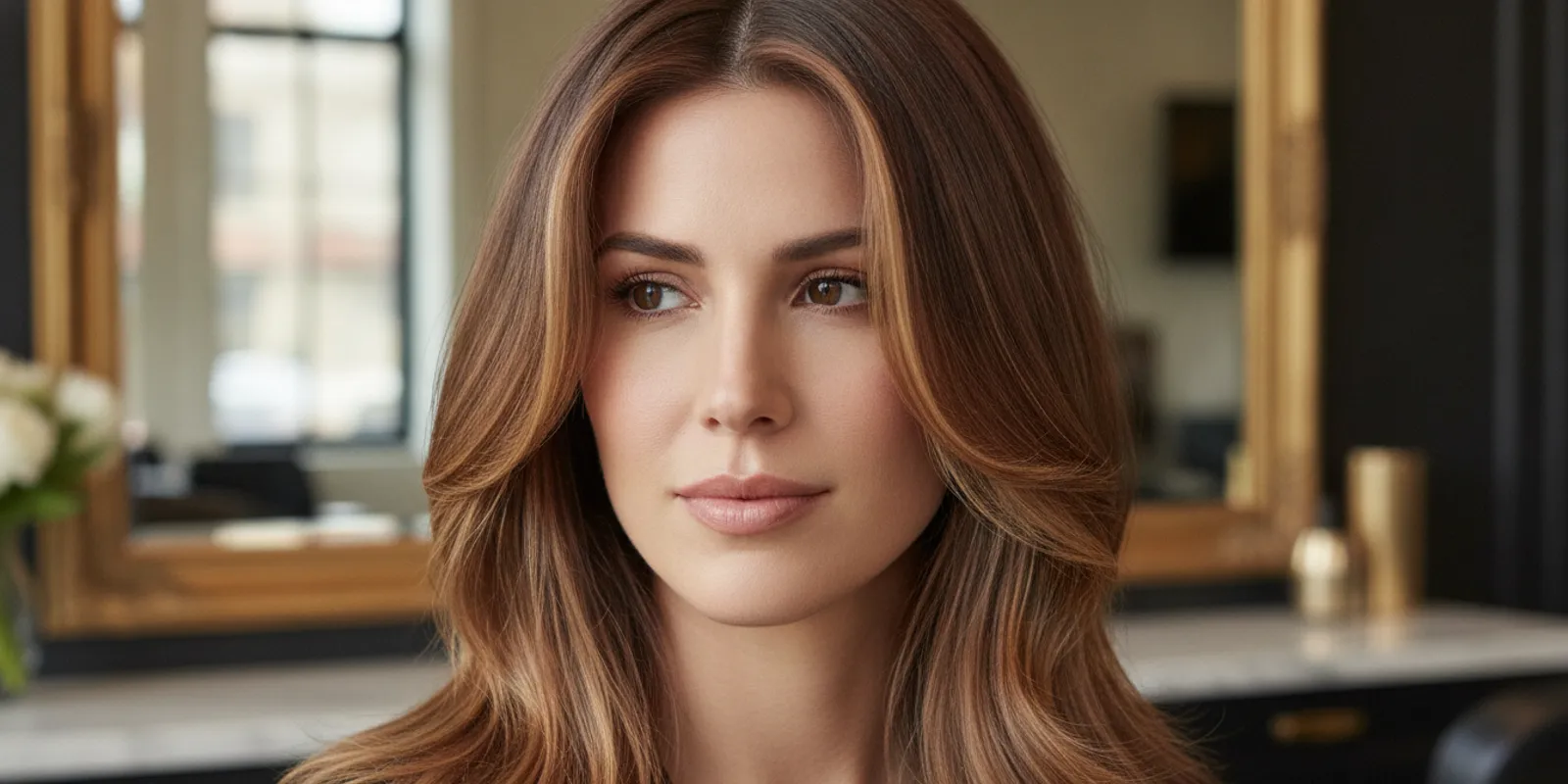
When you are weighing highlights vs all over color, the right choice depends on the change you want to see, how you want your color to grow out, and how much upkeep feels comfortable. Highlights create lighter pieces within the hair; all-over color applies color throughout the head. Both can be tailored, but they create different patterns and require different plans. Here is how to compare them before talking through your goals with a color professional.
What is the difference between highlights and all-over color?
Highlights lighten selected sections of hair rather than coloring every strand in the same way. A colorist places lighter pieces strategically to add contrast, brightness, or dimension. The result can range from fine, subtle ribbons to a more noticeable contrast. The exact look depends on placement, the starting color, the desired brightness, and the tone selected.
All-over color applies a chosen color across the hair, from roots through the lengths or in a customized pattern that addresses the hair’s existing color. It can deepen or enrich the overall shade, shift the tone, or make the color appear more uniform. “All-over” describes the coverage pattern; it does not by itself tell you whether the formula is permanent, demi-permanent, or another type. The appropriate approach depends on the result and your hair history.
These are not always mutually exclusive services. A color plan may combine a base color with highlights, or use a few lighter pieces to make an all-over shade look more dimensional. A colorist may also recommend a different service after assessing your hair in person. Think of the comparison as a starting point for a conversation, not a formula that determines the right service without considering your hair.
How do the results compare?
| Consideration | Highlights | All-over color |
|---|---|---|
| Where color is placed | Selected sections are lightened to create lighter pieces and contrast. | Color is applied throughout the hair to shift or enrich the overall shade. |
| Visual effect | Often dimensional, with variation between lighter and darker areas. | Often more uniform in tone, though the result still varies with the starting hair and formula. |
| Gray blending | Can soften the contrast between gray and the surrounding hair, depending on placement and the amount of gray. | Can provide a more consistent overall color approach; the degree of gray coverage depends on the chosen formula and plan. |
| Grow-out | May appear softer when lighter pieces are blended with the base, but grow-out depends on placement and contrast. | Regrowth may be more noticeable when the roots differ clearly from the colored lengths. |
| Upkeep | Refresh timing depends on placement, desired brightness, and how much contrast you like. | Root maintenance may be more regular when maintaining a consistent shade or covering visible regrowth. |
| Best discussed at consultation | Desired lightness, placement, tone, and how to preserve the condition of previously colored hair. | Desired shade, gray goals, existing color, regrowth expectations, and the right color type. |
The table describes common differences, not guaranteed outcomes. Hair color is affected by your natural shade, past color services, texture, density, condition, and the exact plan. A colorist can explain what is realistic for your starting point.
When might highlights fit your goals?
Highlights may be worth discussing if you want lighter pieces and variation rather than one consistent shade from root to end. They can bring brightness around the face, create a sunlit effect through the lengths, or add contrast to a darker base. The placement can be subtle or more pronounced. A useful consultation begins with the look you want, not simply a request for “highlights,” because that word can describe many patterns.
You want dimension, not a single overall tone
If you like seeing lighter and darker areas together, highlights may be a natural starting point. A colorist can discuss where to place the lighter pieces and how much contrast will suit your desired result. For a restrained change, you might ask about fine, blended brightness. For a more visible transformation, you can bring reference images that show the degree of lightness and contrast you have in mind.
Keep in mind that a photograph is a guide, not a promise. The same highlight placement can look different across hair colors, textures, and lighting. Your colorist may adapt the plan to your natural base and the condition of your lengths. Ask which parts of your reference are achievable for you and which may need a more gradual approach.
You want a lighter effect while keeping depth
Highlights leave some of the base color visible between lighter sections. That contrast can help the finished color feel dimensional rather than uniformly light. The amount of retained depth is part of the design: a few lighter pieces create a different impression from a more extensive placement.
Talk about how light you want to look overall, not only the shade of the lightest pieces. A very light highlight against a deep base may create strong contrast; a closer shade may appear softer. Your colorist can help describe how placement and tone work together and what can be achieved without assuming every head of hair should follow the same plan.
You want to soften the appearance of gray
Highlights can sometimes make gray strands less distinct by adding lighter areas nearby. This is often described as blending, but it is not the same as promising complete gray coverage. The effect depends on how much gray is present, where it is concentrated, your base color, and the placement and tone of the highlights.
If your priority is to cover gray consistently, say so at the beginning of the conversation. If your priority is a softer transition and you are comfortable seeing some gray, explain that too. The difference matters: a plan designed for blending may not produce the same coverage as a plan designed to cover roots. Discuss how you want the color to look as it grows out and how often you are willing to refresh it.
You prefer a grow-out that can look softer
Highlights do not automatically mean low maintenance. However, a blended placement with a modest difference from your base may make new growth less sharply defined than a solid shade with a strong root-to-length contrast. The outcome depends on where the highlights begin, how light they are, and how your natural color contrasts with them.
Tell your colorist if you want to stretch time between visits or if you prefer a consistently fresh look. Ask how the proposed placement may grow out on your hair and what maintenance would keep it looking intentional. It is better to establish this preference before choosing a bright or high-contrast result.
You want to keep the base visible
Because highlights involve selected sections, they can let the natural or previously colored base remain part of the overall look. This can be useful if you like your current depth but want to add brightness around the face or through certain lengths. It can also give your colorist more than one tone to work with when planning dimension.
Describe which areas you want to remain dark and which you would like to look brighter. For example, you may want to see a few lighter pieces near the face but retain depth through the back, or you may prefer brightness distributed through the lengths. These are different visual plans even if both are called highlights. Clear priorities help a colorist discuss placement rather than assuming that a general service label means one standard result.
When might all-over color fit your goals?
All-over color may fit when you want to change or enrich the overall impression of your hair rather than add selected lighter strands. It can be used to deepen a shade, refresh a tone, or pursue more uniform color. Because “all-over color” describes where color is applied and not a single formula or result, the consultation should clarify the exact shade, finish, and desired level of coverage.
You want a more consistent shade
If you prefer a cohesive color from roots through the lengths, all-over color may be a useful option to discuss. This may suit someone who wants to deepen a faded-looking shade or move toward a different overall tone. The final result is still influenced by the existing color in different areas of the hair. Previously colored lengths may not respond in precisely the same way as natural regrowth.
Bring up any past color services, at-home color, glosses, or other treatments. Even if the color has faded, that history can affect the plan. Your colorist needs to understand the starting point before recommending a change. Be clear about whether you want a subtle refresh or a visible shift, and ask how the shade might look in indoor and natural light.
You want to deepen or adjust your overall tone
All-over color can be considered when the goal is to make the overall shade richer, darker, or different in tone. The best description is specific: for example, say whether you want warmer, cooler, deeper, or closer to your natural shade. Words such as “brighter” or “more natural” can mean different things to different people, so images and clear examples can help.
Color history matters especially when you want a major shift. A colorist may recommend a staged plan rather than trying to reach a dramatic result in one appointment. Do not assume that applying a lighter color over previously colored hair will produce the desired lift. Ask what steps may be needed, what is realistic, and how the condition of your hair will guide the plan.
You want to discuss gray coverage
All-over color may be appropriate to discuss if your main goal is a more consistent approach to visible gray. The level of coverage depends on the formula, your hair, and the desired result. Some people want gray to be less visible; others prefer a blended appearance that allows some silver to remain. These are different goals and can call for different techniques.
Be ready to describe how much gray you see, where it is most noticeable, and how often you would be comfortable maintaining the roots. If you are unsure, say that. A consultation can compare the appearance and upkeep of a more uniform shade with a softer blending strategy so you can choose based on your priorities.
You want to refresh a shade that feels faded
Sometimes the main concern is not a dramatic color change. The overall tone may feel less rich than it did previously, or different areas may look uneven in certain light. All-over color may be discussed as one way to refresh an overall impression, but the exact plan depends on what is already on the hair. A colorist can help determine whether the goal calls for color throughout, a more targeted adjustment, or another approach.
Before choosing a service, point out the areas that bother you most. If the roots look different from the ends, explain that distinction. If the ends look dull while the roots still feel right, say so. “Refresh my color” can describe several needs, and addressing the actual concern may avoid changing areas that already look the way you want. Bring a current photo taken in ordinary light if you want to show how you see the color day to day.
How should you decide based on your starting point?
There is no single best choice for every hair color or history. A few practical questions can help narrow the conversation.
- What do you want to notice first? If you want lighter ribbons and contrast, ask about highlights. If you want the overall shade to look different, ask about all-over color.
- How much gray do you want to see? Explain whether you want consistent coverage, softer blending, or simply to make gray less prominent.
- How should the color grow out? A high-contrast root can be more visible as it grows. Tell the colorist whether you value a soft transition or a regularly refreshed look.
- How much change are you seeking? A small tonal adjustment and a dramatic shift are not the same project. Describe the change in everyday terms and bring a reference.
- What has been done to your hair? Previous color, lightening, and treatments are relevant. Share what you remember, including approximate timing.
- How much maintenance suits you? Be honest about your schedule. A plan that looks beautiful immediately but does not fit your routine may not be the best fit.
Your natural starting color, density, texture, and current condition all influence how the result will look. Two clients asking for the same shade may need different service plans. That is why color recommendations should be personalized rather than selected by a generic chart or a single social media image.
Start with the outcome, then name the technique
A useful way to prepare is to describe the result you want before choosing the service name. You might say, “I want brightness around my face but I want to keep my overall brunette depth,” or, “I would like my color to look more even from root to end.” Those statements tell the colorist more than a technique label alone. They also leave room to discuss a customized approach if your first idea does not suit your starting point.
Think about the overall impression rather than focusing only on a swatch or a single lock of hair. Do you want people to notice lighter pieces, a richer tone, a softer transition from roots, or less contrast from gray? If two goals matter equally, explain that. A plan that addresses brightness but ignores root upkeep may not feel successful to you, even if the color itself looks attractive.
Use reference images with care
Images can help you explain tone, placement, contrast, and finish. Choose a small set that represents the direction you like, rather than bringing many pictures that show conflicting results. Point to the exact detail in each photo: the brightness near the face, the retained depth at the roots, or the way lighter strands are dispersed through the lengths. This turns inspiration into a practical conversation.
Try to notice whether a reference resembles your own base color, length, and texture. A photograph may have been taken in bright sunlight, edited, filtered, or styled differently from your everyday hair. A good reference is not a promise of an identical result. It is a way to communicate preferences and then ask the colorist how those preferences might translate to your hair.
How do highlights and all-over color grow out?
Grow-out is one of the most useful distinctions to consider. With highlights, new growth emerges between lighter sections. If the highlights are blended and not dramatically lighter than the base, the transition may feel softer. If they begin close to the scalp and create strong contrast, regrowth can still be noticeable.
With all-over color, the natural root may form a more continuous line against the colored hair, particularly when the chosen shade differs substantially from your natural color. The visibility of that line varies. A color close to your natural shade may be less distinct than a much lighter or darker change, but individual hair and color history matter.
Ask your colorist to describe the expected grow-out in plain terms. Useful questions include: “Where will my natural root show first?” “Will this look soft or defined as it grows?” and “What would a maintenance visit involve?” If low-contrast grow-out is a priority, mention it before settling on a technique. Placement and shade can be adjusted to take that goal into account.
Maintenance is not simply a calendar interval. It depends on how quickly your hair grows, how strong a contrast you choose, how much gray you want to address, and your personal preference for freshness. One person may be comfortable with visible regrowth; another may want to maintain a precise look. Your plan should reflect your own tolerance rather than an assumed schedule.
Map out the first few months, not just the first day
It is easy to judge a color choice by the immediate finish. Try also to picture how it will look after the first few weeks and as new growth becomes visible. If you prefer a consistently polished root, ask what kind of follow-up the plan may involve. If you would rather have a more relaxed transition, ask whether the proposed contrast and placement can support that preference. Neither approach is inherently better; the useful choice is the one that matches your routine and taste.
Consider what you tend to notice between appointments. Some clients focus on visible root growth, while others pay more attention to the tone of their lengths or the amount of brightness around the face. Naming your personal “I notice this first” factor can guide a maintenance plan. It can also help set realistic expectations about what a refresh would address and what it would leave unchanged.
Do not treat a softer grow-out as a guarantee that you will never want a touch-up. A blended pattern may reduce a stark line in some cases, but the desired appearance can still change over time. Your color may look different as it grows, and the contrast you enjoy today may feel less noticeable later. Ask what adjustments are possible if your preferences change.
How do highlights and all-over color affect maintenance?
Highlights may need refreshing when the lighter pieces no longer sit where you want them, when the tone changes, or when new growth affects the overall blend. The timing can vary with the placement and the effect you want to keep. Some clients may also discuss a tonal refresh between larger color appointments; whether that makes sense depends on the service plan.
All-over color maintenance may focus on visible roots, a change in tone, or a difference between new growth and previously colored lengths. Reapplying color through the entire length every time is not automatically the right approach. Your colorist can explain what should be refreshed and how to keep the plan suited to the existing hair.
During a consultation, ask for a realistic maintenance outline rather than a promise of a fixed interval. Consider:
- How often you expect to visit the salon.
- Whether you would rather see softer grow-out or keep a consistently refreshed color.
- How much of the service should be revisited at future appointments.
- Whether your desired brightness or gray goal changes the maintenance pattern.
- What home care the colorist recommends from the professional products available for your hair and service.
It may help to describe your schedule in concrete terms. For instance, explain whether you can plan appointments regularly, whether travel or work makes dates unpredictable, or whether you prefer to wait until a change is clearly visible. You do not need to know how many weeks are ideal. The colorist can explain the likely pattern for the design under consideration and you can decide whether it suits your habits.
Ask which elements of the look are most important to preserve. If your priority is a bright face-framing effect, the maintenance plan may focus on that area. If you care most about a consistent root, discuss that directly. If the overall tone is what matters, ask what kind of refresh may be appropriate without automatically changing every section. Understanding the purpose of each future visit helps make upkeep feel planned rather than reactive.
At-home care is another part of the conversation, but it should be personalized. Mention how you currently wash and style your hair, and ask whether any adjustments could help you care for the chosen color. Use products that your color professional has recommended for your particular service and hair rather than assuming that every color needs the same routine. Bella Rinova carries professional hair-care products, and the team can discuss which options are appropriate for your needs.
Bella Rinova offers professional hair services and color in Houston, and new color clients must complete a consultation before booking a color service. You can explore the salon’s hair services and discuss your desired result, hair history, and maintenance preferences with the color team.
Can you combine highlights with all-over color?
Yes, a customized plan may combine approaches. For example, a colorist may discuss an overall shade with selected lighter pieces to retain dimension, or highlights with a base adjustment to address the underlying tone. Whether a combination makes sense depends on the starting hair and what you want to achieve.
A combined service is not automatically better or more suitable. It may involve more steps, a more involved maintenance plan, or a different approach to protecting previously colored lengths. Explain which parts of a reference image you like: the brightness, the depth, the contrast, or the overall tone. That helps the professional identify whether one technique or a combination is worth considering.
If your current hair has multiple bands of color or a history of repeated changes, be especially open about that history. A plan may need to prioritize an even result and hair condition over reaching a particular image quickly. Your colorist can explain what is possible in the appointment and whether a gradual approach is more appropriate.
When a blended plan may be worth discussing
A mixed approach may be useful to discuss when one technique alone does not express your goal. Perhaps you want a more cohesive base but also like a few lighter pieces. Or perhaps you want to keep a natural-looking root while making the lengths seem brighter. The terms for a particular service can vary, so focus on explaining the outcome and ask the colorist to describe the steps being considered.
Think through the trade-offs before deciding. A combined plan could add visual variation, but there may also be more details to maintain and more than one part of the color may need attention over time. Ask how each component is expected to change as your hair grows. It is helpful to know whether a future appointment would refresh the base, the lighter pieces, the tone, or a combination of these.
It is also reasonable to decide that a simpler plan better fits your current priorities. If you are new to color, uncertain about upkeep, or working with a complicated color history, a more conservative first step may make the decision easier. A consultation lets you ask questions and understand possible approaches before committing to a service. There is no need to request the most complex option just because an inspiration image includes several tones.
How does your color history influence the choice?
Your past services are part of the starting point, even when the color has faded or you no longer see a clear line. Salon color, at-home color, previous highlights, lightening, and other chemical services may influence what a colorist recommends. Share what you can remember, including approximate timing and whether different products were used on the roots and lengths. If some details are uncertain, say so rather than trying to fill in gaps.
This context can matter for both options. With highlights, the colorist needs to consider where lighter pieces already exist and how the lengths may respond to another change. With all-over color, the existing shade may vary from one area to another, so a single description of the hair may not tell the whole story. The plan should account for what is actually present, not only the color you hope to reach.
If you have colored your hair at home, bring the product packaging or a photo if available. It is useful to mention whether you applied color only to the roots or also through the lengths. You do not need to justify a past choice or remember every detail perfectly. An accurate conversation helps a professional assess the situation and discuss realistic options.
When the desired change is substantial, ask whether it makes sense to approach it gradually. A staged plan can set priorities for the first visit and later appointments. That may mean working toward the tone over time rather than expecting every part of a reference image at once. Ask what you can expect from an initial appointment, what may remain for a later step, and how to care for the hair in between.
What if you are changing from one approach to another?
Switching from all-over color to highlights, or from highlights to a more uniform shade, is a conversation about the current canvas. There is no universal transition formula. The colorist will need to understand the location and history of previous color and the look you want next. If the hair has been colored in several ways over time, explain each service as clearly as you can.
Before making the change, ask what parts of the current color can remain, what parts may need adjustment, and how the proposed result could evolve through future visits. You can also ask whether a smaller adjustment would help you test a new direction before a larger shift. A thoughtful plan gives you room to understand the process rather than deciding from the service name alone.
What should you bring up during a color consultation?
A good consultation gives the colorist enough context to recommend a service that fits your goals. You do not need to know the technical name for the result. Describe what you would like to see and what you want to avoid.
- Show a few reference images. Choose images that resemble your starting color and hair length where possible. Identify the details you like, and remember that lighting and styling affect how color appears in photos.
- Explain your color history. Mention salon services, at-home color, lightening, and treatments. If you are uncertain about dates or products, share what you do know rather than guessing.
- Describe your gray goal. Say whether you want coverage, blending, or less contrast. Also explain how you feel about visible gray between visits.
- Talk about upkeep honestly. Tell the colorist how often you want to come in and whether you are comfortable with visible regrowth.
- Ask about the process and expectations. Find out which approach is being considered, what it can achieve on your starting hair, and whether a gradual plan may be needed.
- Discuss the condition of your hair. Mention dryness, breakage, or other concerns you have noticed. Ask how those factors influence the recommendation and what care is appropriate afterward.
You can make the conversation more useful by sorting your preferences into “must have,” “would like,” and “would rather avoid.” For example, a must-have might be maintaining depth at the roots; a would-like might be added brightness around the face; an avoid might be a sharply defined line of regrowth. This simple exercise helps the colorist understand how to balance your preferences if not every element can be achieved at once.
Also consider the practical details you want clarified. Ask what the proposed service includes, how the result might differ from your reference, what kind of maintenance to expect, and whether more than one appointment could be appropriate. If you want a particular finish for an upcoming event or season, mention your timing early. That gives the salon a chance to discuss whether your preferred schedule and color goal can work together.
For new color clients, Bella Rinova requires a consultation before booking a color service. Virtual consultations are available for complex services and prospective clients. You can contact Bella Rinova to discuss a consultation and what to prepare.
Common assumptions that can make the choice harder
“Highlights are always lower maintenance.”
Not necessarily. A blended, low-contrast placement may grow out softly, but brighter highlights close to the scalp can still need regular attention. Maintenance depends on your chosen result and what you consider acceptable between appointments.
“All-over color always covers every gray strand.”
Coverage is influenced by the formula and the hair, so the service name alone is not a guarantee. Tell the colorist how much coverage you want and ask what result is realistic for your starting point.
“Highlights always make hair look blonde.”
Highlights can be subtle and can be designed in relation to the base shade. They are not limited to one blonde look. The colorist can discuss the tone and degree of contrast that fit your goals.
“All-over color means one flat, artificial-looking shade.”
It does not have to mean that. The shade, starting color, and how the plan handles different areas all affect the result. But if visible variation is important to you, say so; highlights or a combination may be worth discussing.
“A reference photo tells the colorist exactly what to do.”
Images are helpful for communicating a direction, but they cannot show your complete color history or predict the exact result on your hair. Use them to explain your preferences, then let the professional assess what is suitable for your individual starting point.
“The same color name will look the same on everyone.”
A shade name or swatch gives only part of the picture. The underlying color, previously colored areas, amount of contrast, and placement can all influence how a finished look appears. If you are comparing examples, look at the overall relationship between the base and lighter pieces, not just a label such as warm brown or beige blonde. Ask the colorist to translate your description into a plan for your hair.
“I should know exactly which service to book before asking questions.”
You do not need to arrive with a final technical decision. In fact, explaining your goal and your routine may be more useful than selecting a service based on a name you have seen online. A consultation is a chance to discuss options and understand what fits your starting point. New color clients at Bella Rinova complete a consultation before booking a color service, so the recommendation can be personalized.
A practical decision guide: match your priority to the conversation
If you are still unsure, use your most important priority to start the discussion. This does not dictate the final technique. It gives you a clear way to explain what you want the color to do.
- “I want to see lighter pieces, but keep depth.” Ask about highlight placement and how much of your base would remain visible. Discuss the contrast you like and the areas where brightness matters most.
- “I want my overall shade to feel richer or different.” Ask whether all-over color suits the goal, and explain whether the change is subtle, warmer, cooler, deeper, or more uniform.
- “I want gray to be less noticeable.” Clarify whether you prefer more consistent coverage or a softer blend. Talk about where gray is most visible and how you feel about regrowth.
- “I want a softer root transition.” Ask how the choice of shade and placement affects grow-out. Do not assume that a technique name alone guarantees a low-maintenance result.
- “I want brightness and a cohesive base.” Ask whether a combined plan is appropriate, what each part would accomplish, and how each part might be maintained.
- “I do not know what I want yet.” Bring examples of what you like and dislike. The colorist can help you compare options without asking you to commit to a result before you understand the trade-offs.
Next, weigh the practical limits around your priority. How much visible regrowth can you accept? Are you comfortable with a gradual change if your hair history calls for it? Would you rather maintain one overall tone, or do you enjoy the variation that lighter pieces create? These questions help distinguish between a look you like in a photograph and a plan you are likely to enjoy living with.
It can also help to tell the colorist what you do not want. Perhaps you do not want a bright result, do not want to lose your base depth, or do not want to commit to frequent root maintenance. A clear boundary can be as useful as an inspiration image. If your goals compete—for example, maximum brightness and minimal visible contrast at the root—ask how the plan can balance them and which trade-off matters most.
How do tone, contrast, and placement change the decision?
Technique is only one part of the finished impression. Tone and contrast can make a highlight plan feel soft or striking, while an all-over shade can look close to your starting color or noticeably different. When you describe what you want, separate the pattern from the color itself. For example, “I like the brightness of this photo, but not the very strong contrast” gives the colorist two useful pieces of information.
Warm, cool, and neutral are broad descriptions, and people may use them differently. If you have a preference, show an image and point to the part that appeals to you. You can also say which tones you tend to avoid. The important point is not to select a technical color vocabulary perfectly; it is to communicate how you want the finished hair to read next to your skin, your natural base, and the styles you usually wear.
Placement changes where attention falls. Lighter pieces around the face can create a different focal point from brightness distributed through the lengths. Pieces that begin near the roots have a different grow-out pattern from pieces that start farther down. All-over color also needs a placement conversation when the root area and lengths have different histories or when you want to preserve some variation. Ask the colorist to describe the proposed placement in ordinary language before you settle on it.
Contrast is worth considering separately from lightness. A highlight can be light but close enough to the base to look blended, or it can stand apart clearly. Similarly, a darker all-over shade can create a pronounced change even though it does not add brightness. Think about whether you want people to notice a change immediately or simply feel that your overall color looks more polished. That preference can guide a more precise conversation.
How can you compare realistic scenarios?
Imagine a client with a natural medium-brown base who wants a little more brightness but still likes seeing brunette depth. The useful question may be how much lighter contrast to add and where to place it, rather than whether every strand should change. A colorist might discuss selected highlights and explain how the amount and distribution of lighter pieces would affect the result. The client can then say whether a few subtle accents or a more visible shift feels closer to the goal.
Now consider someone whose main concern is a visible difference between gray roots and colored lengths. The deciding factor may be the desired relationship to the gray: should it be covered more consistently, softened with surrounding brightness, or allowed to remain part of a blended look? Those preferences lead to different conversations. The client should also consider how often they want to address roots, because a satisfying result on the appointment day must be weighed against the appearance they are comfortable with as new growth appears.
A third person may have colored the hair at home and now want to move lighter. In that case, the label “highlights” does not tell the whole story. The colorist first needs to understand what color is present and how it varies through the lengths. It may be appropriate to discuss a gradual route, an adjusted goal, or a different sequence of services. Being transparent about history helps the professional explain the possibilities without treating an inspiration picture as a guaranteed outcome.
Finally, someone who loves a single rich shade may not want lighter pieces at all. If the goal is a deeper, more cohesive overall tone, all-over color may be the more relevant starting point for discussion. But even then, the colorist needs to understand whether the client wants a small refresh, a shift in warmth, or a more substantial change. These examples do not prescribe a service; they show how starting point and priority shape the consultation.
What does a thoughtful consultation conversation sound like?
You can make a consultation concrete by explaining the current color first, then the desired change, and finally your maintenance preference. One simple format is: “My hair is currently ____. I would like to see ____. I want to avoid ____. I am comfortable with ____ as it grows out.” Fill in each blank in your own words. For example, you might describe a medium-brown base, ask for visible brightness around the face, say that you want to retain depth, and explain that a soft transition matters more than a very bright result.
After describing your goal, ask the colorist to repeat the plan in plain language. You can confirm where color would be placed, whether the overall tone would change, what parts of the existing hair would be addressed, and what future upkeep may involve. If the explanation includes a term you do not know, ask for a simple explanation. Understanding the plan is more useful than agreeing to a service name without knowing what it means for your hair.
It is also reasonable to ask what the proposed plan will not do. A highlights plan intended to create dimension may not deliver uniform gray coverage. An all-over color plan intended to deepen the overall shade may not produce the lighter pieces in your inspiration image. Asking about limits helps keep expectations aligned and makes it easier to decide whether a different option would better fit your priorities.
Take time to consider the information you receive. If two priorities compete, ask which one the plan emphasizes and what could be adjusted. You might decide that maintaining a softer grow-out matters more than achieving maximum brightness, or that a more consistent overall shade matters more than visible variation. A clear decision does not require perfect certainty; it requires understanding what you are choosing and why.
How should you think about the condition of your hair?
Your hair’s current condition belongs in the decision alongside color preference. Mention any concerns you have noticed, such as dryness, breakage, tangling, or areas that feel different from the rest. The professional can assess your hair and discuss how its condition affects the service plan. Do not assume that two people with a similar starting shade can follow the same route if their hair histories and current condition differ.
Ask how the recommendation balances the visual result with the condition of your lengths. If you are requesting a substantial change, find out whether the colorist would prefer to make progress in stages or revise the goal. A staged plan can be disappointing only if you expect an immediate transformation; when discussed clearly, it can give you a more realistic path and a chance to make decisions as you go.
Be candid about any recent services and the products or processes used at home. The best time to mention them is before a recommendation is finalized, not after the plan is underway. If you are unsure how to describe a past treatment, share the details you remember and let the color professional ask follow-up questions. Accurate context supports a more thoughtful assessment.
After the service, follow the care advice that is specific to your hair and the color work performed. If you notice a change that concerns you, contact the salon and describe what you are seeing rather than trying to correct the color on your own. Your colorist can advise whether the result is behaving as expected and what next step, if any, should be considered. Personal guidance is more useful than applying a general rule to every color service.
Which service should you choose?
Consider highlights if your main goal is selected lighter pieces, added brightness, or dimension while retaining some of your base. Consider all-over color if you want to shift or enrich the overall shade, or if a more uniform approach is central to your goal. If you want both overall tone and variation, ask whether a combined plan is appropriate.
Before deciding, weigh four factors: the finish you want, how you want gray handled, how visible you are comfortable with your grow-out becoming, and the maintenance you can realistically keep up with. Then add your hair history and current condition to the discussion. No short comparison can account for all of those details on its own.
At Bella Rinova, the color plan begins with consultation. Bring your questions and inspiration images, and be candid about your past services and upkeep preferences. The right recommendation is the one that makes sense for your hair and the result you want—not simply the name of a technique.
Request a personalized color consultation
With a clear goal and an informed conversation, you can choose a color approach that feels considered from the first appointment through its grow-out.
Frequently asked questions
Are highlights or all-over color better for gray hair?
It depends on whether your priority is a more consistent coverage approach or a softer, blended appearance. Highlights may soften contrast for some starting points, while all-over color may be discussed when you want a more uniform shade. Ask the colorist to assess your amount and placement of gray and explain the realistic result for your hair.
Which option looks more natural?
Either can look natural when the shade and technique suit your starting color and preferences. Highlights create variation; all-over color can create a cohesive overall tone. “Natural” can mean close to your own shade, soft contrast, or a believable-looking change, so describe what you mean with examples.
Can I switch from all-over color to highlights?
Possibly, but the color history in your lengths affects what can be done and how quickly. Share the products and services you have used, including at-home color. Your colorist can assess your starting point and discuss whether a gradual plan is needed.
Do highlights or all-over color take longer?
There is no single timing that applies to everyone. The appointment depends on the technique, the amount of hair, your starting color, and the desired result. Ask about timing during your consultation rather than relying on a general estimate.
Can I book a color service before a consultation at Bella Rinova?
New color clients must complete a consultation before booking a color service. This gives the color team an opportunity to understand your goals and hair history before recommending a personalized approach. Contact the salon to discuss the next step.
Should I choose highlights if I want a subtle change?
Highlights can be designed for a subtle effect, but subtlety depends on placement, brightness, and the difference between the lighter pieces and your base. All-over color can also be used to make a restrained adjustment to an overall tone. Explain what you mean by subtle—less contrast, less brightness, or a result closer to your natural shade—and ask which approach better fits that preference.
Can all-over color add dimension?
All-over color describes coverage, not a promise of a flat result. The starting hair, chosen shade, and customized plan influence how the finished color appears. If visible variation is a priority, tell the colorist and ask whether selected highlights or another blended approach should be considered alongside the overall tone.
What should I do if my hair has several old colors in it?
Share the history as completely as you can, including salon and at-home services. Explain what you want to change and which areas concern you. A colorist can assess the current canvas and discuss whether a gradual or adjusted plan is more appropriate than trying to reach a reference result in one step.
Choosing between highlights and all-over color starts with the result you want and ends with a plan shaped around your hair, history, and upkeep preferences. A consultation can help turn those priorities into a considered next step.
