
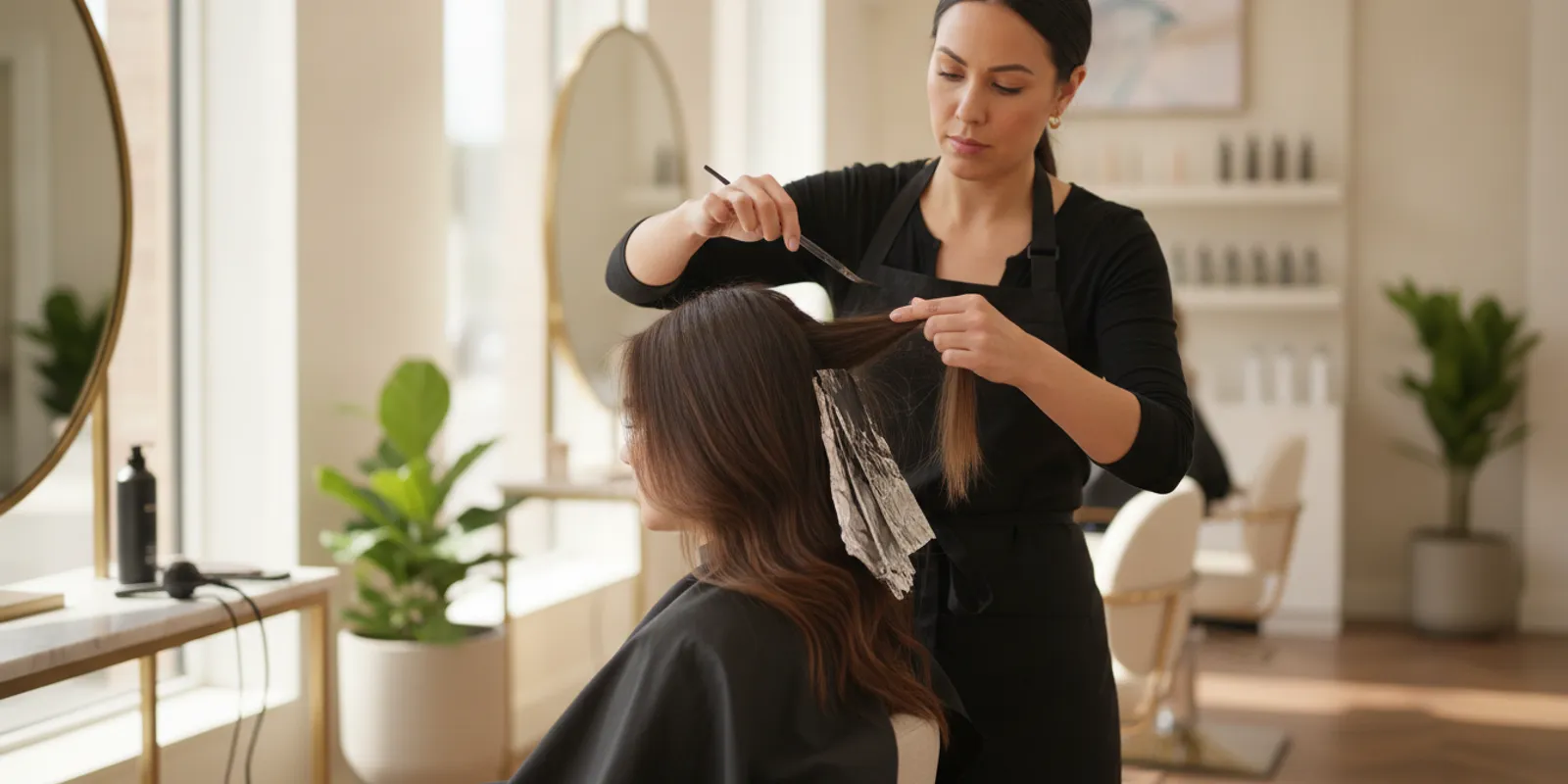
When weighing partial highlights vs full highlights, the key difference is where the color is placed and how much of the head it brightens. Partial highlights add dimension to selected areas, while full highlights distribute lighter pieces more broadly around the head. Neither option is automatically better: the right choice depends on the look you want, your starting color, your hair’s condition, and how you prefer to maintain it.
Highlights are a customized color service, not a one-size-fits-all formula. At Bella Rinova, new color clients complete a consultation before booking a color service. That conversation gives your colorist a chance to understand your history, assess your hair, and discuss the placement and upkeep that fit your priorities. You can explore the salon’s hair services and learn more about Bella Rinova before you visit.
How do partial highlights vs full highlights compare?
A partial highlight service places lighter pieces in selected zones rather than throughout every section of the head. Common areas include the hairline, top, crown, or other visible sections. Your colorist may focus the work where light would naturally catch, or place it to support a particular shape or styling goal.
Full highlights are placed more broadly around the head, including areas that may not be as visible when your hair is down. The service can create a more even spread of lighter pieces from front to back and top to underneath. “Full” describes the broader placement, not a promise that every strand will be colored or that the result will be one solid shade.
Both services can be subtle or more noticeable. The outcome depends on the number, width, and spacing of the highlighted sections; the contrast between your base and the lighter pieces; and how the color is finished. A partial service can look bright around the face, while a full service can remain soft and blended. The service name alone does not determine how dramatic the result will be.
It is useful to think of partial and full highlights as different coverage plans. They are not simply two levels of intensity. A thoughtfully placed partial may deliver a visible change in a specific area, while a full placement may spread a similar degree of brightness across more of the head. Explain what you notice in daily life, such as roots showing at the part or darker pieces underneath, rather than relying only on a label.
Which areas can a partial highlight service cover?
“Partial” does not refer to one universal map. Salons and colorists may define service sections differently, and the exact plan should be clarified during consultation. These are common placements to discuss:
- Hairline and face-framing pieces: Brightness around the face can make the front sections stand out. This may be appealing if you mostly notice your color around your face or want lightness in the sections that frame it.
- Top and part line: The upper sections are visible when hair is worn down and are often exposed to light. A plan concentrated here may make the top appear brighter without adding the same level of color underneath.
- Crown: Highlighting through the crown can add dimension where hair moves and separates. The specific section size and placement depend on your part, haircut, and how you usually style your hair.
- Selected side sections: A colorist can consider how the sides look when tucked behind the ears, swept back, or worn forward. Placement can be adjusted to your regular styling habits.
- Visible sections around a part or fringe: Where your hair falls can affect which pieces are most noticeable. A stable part and a fringe or face-framing cut may influence the placement plan.
A partial service can be a useful choice when your goal is targeted brightness rather than an all-around change. For example, someone who likes the color underneath but wants more light around the face could ask whether a focused placement suits that goal. Someone who wears a ponytail often may want to mention it, since the hairline and sides can be more visible when the hair is pulled back.
There are limits to what selected placement can address. If your hair is often worn up, braided, or swept back, areas left out of a partial service may become more noticeable. If you want lighter pieces visible throughout the underneath and back as well as the top, ask whether broader coverage would better match your styling habits.
What does full highlight coverage usually include?
Full highlights generally involve more sections distributed around the head than a partial service. The plan may include the hairline, top, sides, crown, back, and underneath. Exact placement varies with the salon’s service definition, your hair length and density, and the finished look you are seeking. Ask your colorist which zones are included in the quoted service so that “full” has a clear meaning for your appointment.
Broader placement can be helpful if you want a more consistent pattern of brightness when your hair moves or is styled in different ways. It can also be considered when darker sections beneath or behind the top layer are part of what you want to change. The aim is not necessarily to make every area equally light. A colorist can vary placement to create a dimensional result rather than a uniform blanket of color.
Full highlights do not guarantee a particular level of lift or a specific blonde shade. Your starting color, previous color services, hair condition, and desired contrast all affect what is realistic in one appointment. Your colorist may recommend a gradual approach or a different color plan after reviewing your hair history and goals. A consultation helps set expectations before you commit to the service.
Coverage and color are separate questions. You might choose broader placement but ask for a restrained, natural-looking contrast. Or you might want stronger brightness in selected areas. Talk about both: where you want the light pieces, and how noticeable you want them to feel next to your base color.
How do face-framing highlights differ from highlights through the crown?
Face-framing highlights are concentrated around the front hairline and pieces beside the face. They can make the front of the hairstyle the most visibly bright area. If you are drawn to a lighter perimeter or want the front sections to stand out in photographs, describe that preference and bring reference images that show the placement you like.
Crown placement focuses on the upper area of the head. It may show clearly along your part and across the top, especially when the hair is worn down. The crown is not the same as full coverage: highlights on top can leave much of the back and underneath unchanged.
Underneath placement matters when hair is lifted, tied back, or moved. A plan that focuses on the top may look blended when the hair is down, yet show a sharper difference if darker lower sections are exposed. If you frequently wear your hair up, share that before your colorist maps the service.
None of these zones has to be an all-or-nothing choice. A colorist may discuss combining targeted brightness at the front with selected pieces elsewhere, depending on the service plan and your goals. The appropriate approach is personal; it should be based on your hair and the look you want, not a rule that every client needs identical placement.
How do you compare the two services?
This overview can help you organize your questions, but it is not a price quote or a guarantee of a particular result. Service definitions vary, and your consultation should clarify exactly what the salon recommends.
| Consideration | Partial highlights | Full highlights |
|---|---|---|
| Typical placement | Selected sections, often around the face, top, or crown | Broader placement around the head, potentially including sides, back, and underneath |
| Coverage goal | Brighten chosen visible areas or refresh targeted dimension | Distribute lightened pieces through more areas for a more all-around effect |
| Useful question | Which sections will this service include? | Does the service include the back and underneath sections I want brightened? |
| Maintenance factors | Root growth, placement, contrast, and how visible the selected zones are | Root growth, overall coverage, contrast, and the look of new growth throughout |
| Cost factors | Hair length, density, condition, color history, and the work required | Hair length, density, condition, color history, and the broader placement plan |
| Best next step | Discuss the specific areas you want to see brighter | Discuss desired coverage, starting color, and realistic timing with a colorist |
Use the chart as a way to frame the conversation, not to choose based on a service label alone. If the service name is unfamiliar or the quoted plan is unclear, ask your colorist to describe the sections in plain language. You can also ask what areas will remain close to your current color.
Which option fits the look you want?
A partial service may be worth discussing when you like much of your current color and want brightness concentrated in certain areas. That might mean more light around your face, dimension at the part, or a refresh to visible top sections. It may also suit someone who wants to make a considered change without pursuing a broader coverage plan at that appointment.
Full highlights may be worth discussing when you want lighter pieces distributed more widely, including areas that a focused placement may leave untouched. If you notice a contrast between a bright top and darker underneath, or want highlights to show when your hair is tied back, broader placement could be relevant. Your colorist can tell you whether the change can be approached in one service or should be built over time.
Consider the result from more than one angle. Think about how your hair looks down, in a ponytail, tucked behind your ears, and parted as you usually wear it. If you change your part often, mention that as well. Placement that feels balanced with one part may appear different when the hair is swept another way.
Bring inspiration photos if they help you explain your goal. Look for images with a similar starting color, length, and texture, and be ready to point out what you like: the brightness near the face, the softness of the transition, the amount of contrast, or the way the back looks. A photograph is a communication tool, not a promise that your hair will match it exactly.
It can also help to bring a photo of your current hair in natural light. Styled photographs can conceal the contrast between the top and underneath, or make subtle dimension look more pronounced. Your colorist can use your current appearance and history alongside inspiration to propose a plan suited to you.
How does your starting color affect the choice?
Your starting color has a major influence on how highlights appear. A lighter base may show a softer change, while a darker base can make lighter pieces look more contrasted. The same placement can feel understated on one person and striking on another because the difference between the base and highlighted sections is not the same.
Previous color matters, too. Hair that has been colored before may respond differently from hair with no color history. Tell your colorist about all relevant recent services, including at-home color, glosses, highlights, and color corrections. If you are unsure exactly what was used, say so rather than guessing. A clear history helps your colorist evaluate the starting point and discuss a thoughtful path forward.
Desired brightness is another variable. If your goal is a gradual shift, say that directly. If you want a noticeable change, explain how much contrast you are comfortable seeing and whether you are willing to return for additional work if needed. A consultation can align your goal with what your hair can reasonably support.
Color correction is not the same as a routine highlight refresh. If you have uneven bands, an unexpected tone, or a previous result you want changed, describe the concern when requesting your consultation. Bella Rinova offers color correction services, and correction pricing is consultation-based. Avoid assuming a standard highlight appointment will address a complex color history without a dedicated discussion.
What role do hair length, density, and condition play?
Hair length and density can affect the time and work involved in a color service. Longer hair may require a different application plan from a shorter cut. Dense hair may have more sections to consider, and the colorist may need to account for how it falls and how much coverage you want. These details are part of why a service description alone cannot determine an individual estimate.
Condition also matters. If your hair feels dry, fragile, or has been through several color processes, tell your colorist and describe what you have noticed. The conversation should include your desired result as well as the current state of your hair. Your colorist can discuss whether the plan should be adjusted and what expectations are appropriate.
A haircut can influence where highlights catch and how the color appears. Layers, face-framing pieces, a fringe, and the shape of the ends can all change which sections draw attention. If you are planning a haircut and color, mention the order and timing you have in mind so the stylist can consider the full look.
Texture and styling habits matter as well. Natural waves, curls, and straight styles can reveal dimension differently. A color pattern that appears blended when the hair is curled may look more defined when worn straight. Share how you usually wear your hair, and show a range of reference photos if your routine varies.
How often might highlights need maintenance?
There is no single interval that works for everyone. The timing depends on how quickly your hair grows, how close the highlights sit to the root, how much contrast you prefer, and how noticeable new growth feels to you. A subtle, blended look may be comfortable for longer than a high-contrast result with a sharply defined root area, but your own preference is the deciding factor.
Partial highlights do not always mean less maintenance. A focused placement can still need attention if the front or part line is bright and new growth is prominent to you. On the other hand, a carefully blended plan may grow out in a way that suits your routine. Ask your colorist what maintenance pattern to expect from the proposed placement, rather than relying on the word “partial.”
Full highlights do not automatically require more frequent appointments, either. Maintenance depends on the look and the way the color is placed. Broader coverage may make growth visible in more areas, but a softer transition can change how noticeable it is. Discuss an interval that fits your comfort with visible growth and your appointment schedule.
When planning maintenance, consider more than root coverage. You may want to refresh tone, adjust the placement, or revisit your overall color goal at a later appointment. Ask what your colorist recommends between visits and whether the future plan is expected to differ from the first service. Use professional guidance rather than adding at-home chemical services that could complicate your color history.
How should you think about cost?
A partial service is not automatically inexpensive, and full highlights are not automatically the right investment for every goal. The work required depends on the individual plan. Hair length, density, condition, starting color, previous color, desired brightness, placement, and the complexity of the service all influence an estimate.
At Bella Rinova, color pricing is subject to hair length, density, and condition. Complex color services and color correction require a consultation-based estimate. Treat any listed starting price as a starting point rather than a guaranteed quote for your particular hair. A consultation is the appropriate place to discuss the service scope and expected investment before proceeding.
When comparing estimates, compare what is included, not just the service name. Ask which zones are covered, what finish or additional steps are part of the plan, and whether the estimate reflects your hair’s length and density. If one proposal covers only the top and another includes the sides and underneath, the labels may sound similar while describing different work.
It is reasonable to set a budget for the conversation. Explain your priorities, then ask what approach may fit them. Your colorist may be able to discuss options for staging a change or concentrating on the areas that matter most. The goal is a shared understanding of the plan, not an unexpected commitment.
What should you ask during a color consultation?
A useful consultation turns a broad idea into a specific plan. Before your appointment, consider writing down what you want to change, what you want to preserve, and how much maintenance feels comfortable. These questions can make the conversation more productive:
- Which parts of my hair will be highlighted with this service?
- Will the plan include the back and underneath, or focus on the front, top, and crown?
- How will the result look when I wear my hair down, up, or parted differently?
- How much contrast should I expect between the highlighted pieces and my base?
- How does my color history affect the result and the timing?
- Would a partial placement meet my goal, or would I be happier with broader coverage?
- What should I expect as the color grows out, and when might I want to return?
- How is the estimate determined for my length, density, and condition?
- Would you recommend a gradual approach based on my hair and desired brightness?
- What should I do before the appointment, and what care should I follow afterward?
Be candid about your routine. If you prefer appointments spaced farther apart, say so. If you regularly wear your hair in a bun or ponytail, that is useful information. If you are prepared to maintain a brighter look, tell your colorist that too. There is no benefit in describing an ideal routine that you do not actually follow.
New color clients need a consultation before booking a color service at Bella Rinova. This is especially helpful when you have a complex history, want a significant change, or are uncertain which coverage plan makes sense. You can review the salon’s appointment and service policies before planning your visit.
How can you prepare for your appointment?
Preparation begins with information. Make a simple timeline of past color services and note what you remember about when they occurred. Include at-home products or services, even if they were used only once. If you have photos from previous color appointments, they may help illustrate how your hair responded and what you liked or disliked.
Gather a few inspiration images, not a large collection of conflicting examples. Choose references that show the placement and degree of brightness you like. If you like one photo’s face-framing pieces but another’s softer overall contrast, explain that distinction. Your colorist can help translate preferences into a practical plan for your own hair.
Arrive ready to discuss your routine and priorities. Mention how often you style your hair, whether you swim regularly, and whether you have upcoming events that affect timing. Houston’s warm, humid weather may influence how you style your hair, but it does not determine whether partial or full highlights are right for you. The main point is to plan around the life you actually lead.
Do not make a major at-home color change immediately before a consultation. An unexpected application can alter the starting point and make planning more complicated. If you have already changed your color, simply share what you used and when. Your colorist needs an accurate history, not a perfect one.
What are common misconceptions about partial highlights vs full highlights?
Does “partial” mean only a few highlights?
Not necessarily. Partial describes selected coverage zones, not a fixed number of foils or a guaranteed subtle result. Depending on placement, contrast, and density, partial highlights may be clearly visible. Ask which sections are included and what the planned effect is.
Does “full” mean every strand will be lighter?
No. Full generally describes broader placement around the head. It does not mean every strand is colored or that the whole head becomes one shade. A full highlight plan can retain depth and variation between highlighted sections.
Will partial highlights always grow out more softly?
Not always. How growth looks depends on where the color begins, how much contrast there is, and how your hair grows and is parted. Focused brightness at the hairline or part can be noticeable as it grows, even when coverage is partial. Ask about the expected grow-out for the specific plan.
Are full highlights always more dramatic?
No. Broader placement can be subtle if the contrast is low and the pieces are blended. A partial service can look dramatic if a small number of pieces are placed with strong contrast around the face. Coverage and intensity are related but distinct decisions.
Can a partial service be expanded later?
Your colorist can discuss whether a phased plan makes sense for your hair and goals. A later appointment may broaden coverage, refine placement, or adjust brightness. The timing and approach depend on your starting point and condition, so plan it with your colorist rather than assuming every service can be layered immediately.
How can you decide which option to discuss?
Start with the areas you want to see change. If your main goal is brightness around your face or along the top, ask whether a partial placement can achieve it. If you want lighter pieces visible around the sides, back, and underneath as well, ask about full coverage and what the salon’s full service includes.
Then consider your styling habits and upkeep preferences. A person who wears hair down most days may prioritize the visible top and front. Someone who often wears it up may care just as much about the sides and underneath. If you want less contrast at the root, explain that preference; your colorist can consider placement and blending as part of the plan.
Finally, account for your starting color, history, condition, and budget. Those details affect both what is possible and what the service involves. A consultation lets a professional evaluate them and help you choose a plan with clear expectations.
For a personalized recommendation, review the salon’s hair and spa services and discuss your goals with the color team. Bella Rinova has served Houston clients since 1999, with a full team of beauty professionals and a consultation-first approach to new color services.
The best choice is the one whose placement, maintenance, and expected result suit your hair and your everyday routine. Bring your questions to a consultation so your colorist can recommend coverage tailored to your starting point and goals.
