Balayage vs Ombre: Differences, Maintenance, and Choosing a Look

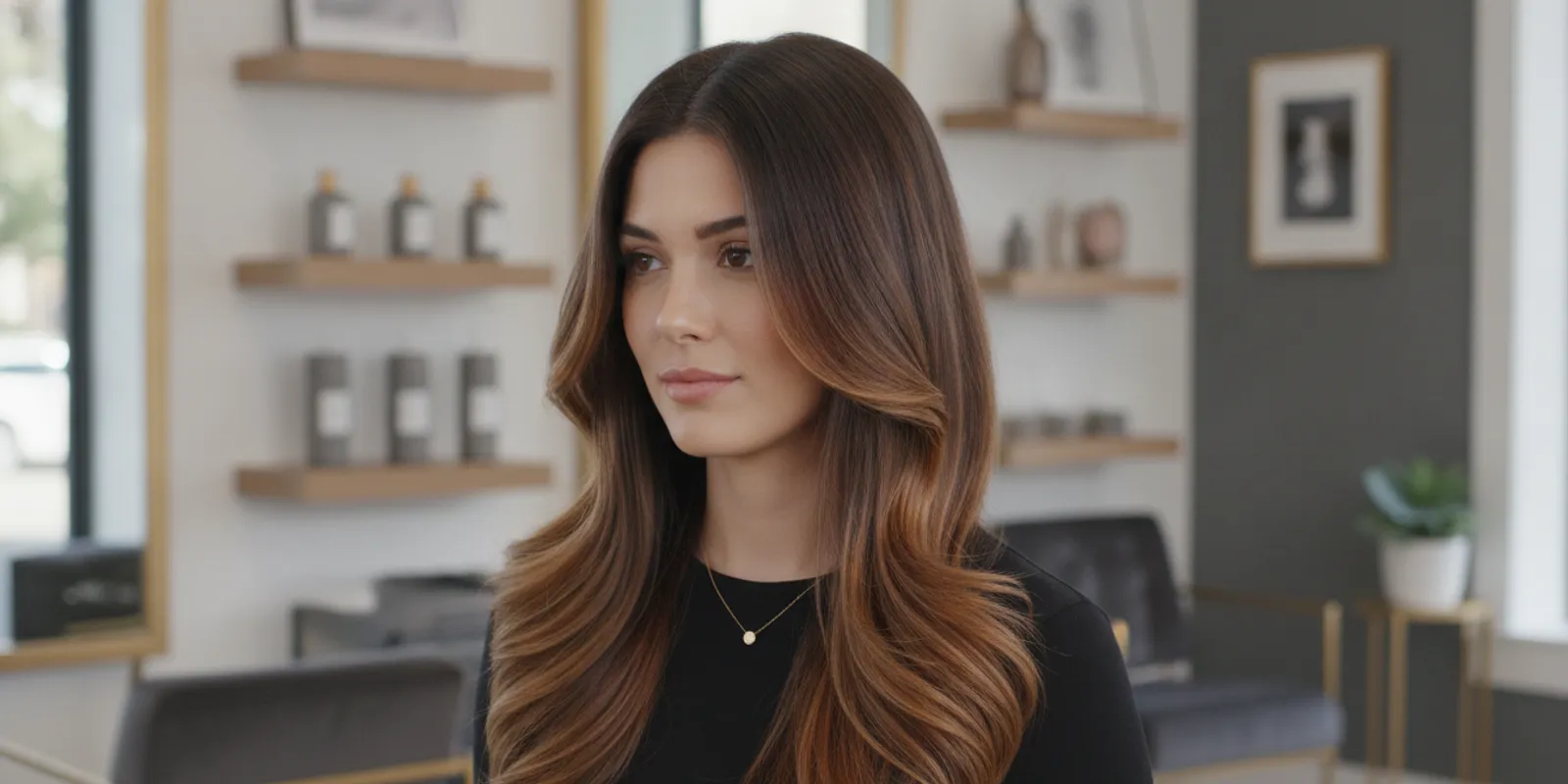
Dimensional brunette hair with softly blended lighter ends styled in loose waves

Balayage vs ombre is not always an either-or choice: balayage describes a highlighting technique, while ombre describes a gradual color effect from darker roots toward lighter ends. A stylist may use balayage to create an ombre-inspired result, but the terms do not mean the same thing. The right approach depends on the placement and contrast you want, your starting color, your hair’s history, and how often you want to maintain it.

Request a color consultation

What is the difference between balayage and ombre?

Balayage is a way of applying color. The word is commonly used for a freehand highlighting approach in which a colorist paints selected sections of hair to create dimension. The pattern can be concentrated around the face, distributed through the lengths, or kept subtle near the ends. The result depends on where color is placed, how much contrast is created, and how the selected sections are blended with the base.

Ombre describes a visual transition. The hair generally appears deeper near the roots and progressively lighter toward the mid-lengths and ends. That transition can be soft and gradual or more noticeable. Ombre may be created with different application methods; it is the overall shift in color placement that makes the result read as ombre, not a single required brush technique.

This distinction matters when you are describing a reference photo. A photo can show a hand-painted highlight pattern, a root-to-end gradient, or both. If you ask for “ombre” but want scattered bright pieces around the face, placement needs to be clarified. If you ask for “balayage” but want a very defined dark-to-light gradient, the overall finish should be discussed as well. For a broader look at the salon’s hair services in Houston, you can review available color options before your appointment.

How do the terms describe different things?

Think of the difference as process versus picture. Balayage is most useful for naming an application approach; ombre is most useful for describing a color layout or finish. They are related because the application method can help create the effect, but they answer different questions.

  • Balayage answers: How might color be applied and blended?
  • Ombre answers: How does the color appear to move from the roots through the ends?
  • A combined request answers both: Which technique or placement should create the desired gradient?

Salon language is not always used consistently. One person may call any softly blended lightening “balayage,” while another may use “ombre” for nearly any dark-to-light shift. That makes the photo, not the label alone, an important part of the conversation. Describe what you notice: a brighter face frame, ribbons of light through the lengths, a darker root area, lighter ends, or a clear point where the color changes.

Also separate the color plan from the styling in a reference image. Waves can make color look more dimensional because they reveal alternating light and shadow. A straight finish may show the transition more clearly. A photo taken in bright daylight may look warmer or lighter than the same hair indoors. The consultation is a chance to identify the color pattern you want rather than copying lighting, styling, or a filter.

Where is color placed in balayage and ombre?

Balayage placement can be customized across the head. A colorist may paint select strands near the surface, add ribbons through the mid-lengths, brighten around the face, or concentrate lightness lower down. The amount of color close to the roots can vary. The pattern can be fine and delicate or more visible, depending on the desired dimension and the hair’s starting point.

Ombre is usually recognized by a horizontal progression from a deeper area toward lighter lengths and ends. The transition point may sit higher or lower. A lower transition leaves more of the natural or deeper shade visible; a higher transition brings lightness closer to the face and crown. The blend may be seamless or intentionally more defined. Either way, the visual emphasis tends to follow the length of the hair.

These are broad descriptions, not fixed formulas. A balayage result can have light ends and therefore resemble an ombre from a distance. An ombre can contain painted or foiled pieces to soften its transition. A requested look might include both a gradient through the lengths and brighter pieces around the face. Your colorist can explain which placement plan is likely to create the picture you have in mind.

When reviewing photos, look at the root area, the middle of the hair, and the ends separately. Ask yourself whether you like the amount of depth near the scalp, where the first visible lightness begins, and how bright the very ends appear. Then consider whether the light pieces are distributed throughout or mostly grouped toward the bottom. Those observations communicate more than simply saying that you like “dimension.”

How does the transition look?

A balayage blend is often associated with a soft, irregular pattern. Painted sections can vary in width and placement, giving the hair a more scattered distribution of light and dark. That does not mean every balayage result must be subtle. The contrast can be noticeable, and the amount of brightness can be adjusted. The defining idea is the placement and blending of selected sections, not a guarantee of a barely visible result.

An ombre transition is often read as a broader change in color from root area to ends. A polished ombre can have a very gradual blend, with no obvious line. Another version can make the shift more apparent. “Soft” and “strong” describe the transition, not whether the result is well done; the appropriate degree depends on the reference and the client’s preferences.

It can help to describe the transition in plain language. You might want the color change to begin below the cheekbones, the mid-lengths to remain blended, and the ends to be visibly lighter. Or you might want fine pieces from around the face through the crown, with no distinct root-to-end gradient. These details help a colorist translate a visual goal into a placement plan.

Consider how you wear your hair most often, too. A gradient may be especially visible when hair is straight and parted down the middle. Scattered dimension can show differently in a braid, ponytail, or loose wave. If you usually wear your hair up, discuss whether the color should be visible around the face and perimeter, rather than focusing only on how it looks when fully down.

What does the finish look like on different lengths?

Length affects how much space there is for a transition. Long hair offers more room to show a progression from deeper roots through the mid-lengths to lighter ends. On shorter hair, the same shift has less distance in which to blend, so the transition may appear more compact. That does not rule out either approach; it changes how the colorist may adapt the placement and contrast.

On a bob or lob, a small amount of lightness at the ends can create a visible effect without an extended gradient. A balayage-inspired pattern might add a few pieces around the surface or face. On longer hair, lightness can be distributed across more sections or concentrated in the lower lengths. Layers can also change where individual pieces fall and how the color appears when the hair moves.

Hair density and texture matter alongside length. Dense hair may have substantial depth underneath, while finer hair can show a different balance of light and dark. Curl patterns can separate highlighted pieces and reveal their placement. These are not reasons to choose one label automatically. They are factors to assess when deciding how much contrast and how much visible dimension will suit the finished shape.

If you are considering a significant haircut and color change together, mention that early. A length change can remove previously colored ends or alter the proportion of dark and light sections. The order of services and the final shape may influence the color plan. Bringing a current photo of your hair and a reference showing your desired length can make the conversation more specific.

How does starting color affect the choice?

Your starting color is the foundation for either look. A colorist needs to understand whether the hair is natural, previously colored, highlighted, or a combination. Prior color can affect how a new shade develops and how evenly different sections respond. A photograph of the current hair in natural light is useful, but it cannot replace discussing its history.

For a brunette who wants a soft change, scattered balayage placement may create dimension without asking for every end to be equally light. Someone who wants a noticeable progression from a deeper root area to lighter ends may prefer an ombre-inspired layout. A blonde client may want a deeper root effect with brighter lengths, or selected painted pieces for variation. The same label can lead to very different color plans depending on the starting point.

Color history is especially important if the hair has been dyed at home, had several salon services, received a smoothing treatment, or undergone a previous lightening process. The colorist may need to assess the condition and existing tones before recommending a plan. Be candid about past services, even if they were a long time ago or you are unsure what products were used. Accurate information helps set realistic expectations and supports a careful service plan.

Do not assume that a reference photo can be reproduced in one appointment. The person in the photo may have a different starting shade, hair density, length, history, or styling. A color consultation can identify what is achievable now, what may need to happen in stages, and what kind of upkeep may follow. For services that involve a complex prior color history, review the salon’s color correction information and discuss your specific situation with the team.

How do balayage and ombre compare?

The table below compares common ways the two terms are used. It is a planning aid, not a promise that every salon uses identical terminology or that every service will follow one fixed formula.

Factor Balayage Ombre
What the term describes An application approach, commonly associated with freehand painted highlights A gradient or overall dark-to-light color effect
Typical placement pattern Selected pieces that can be distributed around the head and customized Color progression that is more concentrated through the lengths and ends
Root appearance May stay close to the starting color or include brightness near the roots, depending on the plan Often keeps the root area deeper than the ends, but the root treatment can vary
Transition Often blended in an irregular, piece-by-piece pattern Usually planned as a broader progression from one area to another
How the finish reads Dimension can be subtle or pronounced, with selected lighter sections A visible gradient may be the main feature, from soft to more defined
Can the ideas overlap? Yes. Balayage may be used to help create a gradual effect Yes. An ombre result can incorporate painted sections or other placement methods
Upkeep Depends on root brightness, contrast, starting color, and personal preference Depends on transition placement, contrast, tone, and desired end brightness
Best first question Where do you want dimension and how should it be distributed? Where should the color transition begin and how light should the ends look?

There is no universal “winner” in the table. If you like several elements in different photos, point them out separately. You may prefer the root depth in one image, the face-framing placement in another, and the brightness at the ends in a third. Your colorist can help determine whether those elements work together and what adjustments may be needed to create a cohesive result.

Which look may suit your color goals?

Start with what you want to see when you look in the mirror. If you want visible pieces of lightness distributed through the hair, ask about a balayage placement plan. If you want the lengths to change gradually from deeper roots to noticeably lighter ends, explain that you are drawn to an ombre effect. If you want both, say so. Naming the desired visual features is more helpful than insisting on a technique before the colorist has evaluated your hair.

Think about the level of contrast you enjoy. A low-contrast result can keep the overall appearance close to your natural color while adding dimension. A higher-contrast result makes the lighter areas more prominent. Neither is automatically more modern or more flattering. The balance should reflect your preferences, base color, haircut, and willingness to maintain the chosen tone.

Consider whether your goal is face-framing brightness, an all-over dimensional impression, light ends, a richer root area, or a combination. A person who wants brighter pieces at the front but a natural-looking back may need a different placement than someone who wants the most noticeable change at the tips. Be clear about what you do not want as well, such as a sharp band, overly bright ends, or too much lightness near the roots.

Reference images are most useful when they show a result you would be happy to wear, rather than only a color you admire in isolation. Collect a few examples, then identify what they have in common. Do they all have dark roots? Soft transitions? More brightness around the face? Similar lengths? A small set of well-chosen images can reveal the priorities behind the look.

What if you want a natural-looking result?

“Natural-looking” can mean different things. Some clients mean that the color should sit close to their natural shade. Others mean that the blend should not have an obvious line, even when the ends are much lighter. Some want a sunlit impression, while others want their natural root color to remain visible. Explain what natural means to you rather than assuming the term has one shared definition.

Balayage is often chosen for a blended, dimensional appearance, but it does not automatically create a subtle result. Placement can be bold, and the contrast can be strong. Ombre can be soft and understated, even though it is known for a root-to-end progression. A color plan can be tailored to create a delicate or striking finish using either idea or a combination.

Ask the stylist to describe where the brightest pieces will sit and what the overall contrast may look like in daylight and indoors. If the goal is a soft effect, ask whether the plan keeps enough depth between the lighter sections to preserve dimension. If you prefer brighter ends, ask how far the lighter shade will extend and whether the roots will remain close to your current color.

Bring a photo of your own hair in addition to inspiration images. That gives the colorist a practical view of your current shade, length, and texture. The consultation can then focus on what you want to change and what you want to preserve, rather than treating a reference photo as a guarantee.

How should you think about upkeep?

Neither balayage nor ombre is inherently maintenance-free. The time between appointments depends on how close color sits to the roots, how much contrast you choose, how quickly you notice a change in tone or placement, and what result you want to maintain. A darker root area may make regrowth less prominent for some clients, but that does not mean every version grows out the same way or that no refresh will be needed.

Upkeep can involve more than repeating the same color service. Your plan may include refreshing tone, adjusting brightness, maintaining the ends, or reassessing the placement as your hair grows and your preferences change. The right schedule is personal. It should be discussed with the colorist rather than inferred from the name of a technique.

Before choosing, consider what you are willing to maintain. Do you want the hair to look polished between salon visits, or are you comfortable with a more relaxed evolution? Would you rather keep the ends bright, or would you accept a softer finish over time? How much do you notice a change in tone? These answers help define a practical plan.

Houston’s heat and humidity can influence how you style your hair and how often you reach for finishing products, but they do not dictate a particular color technique. Ask for care guidance suited to your hair and service. For professional products the salon carries, you can explore its hair care product selection and discuss recommendations during an appointment.

How do tone and contrast affect maintenance?

Tone and placement are related but separate decisions. Placement determines where the lighter or darker pieces sit; tone describes the shade those pieces appear to be. A color can be placed exactly where you want and still require a separate conversation about warmth, coolness, or how much contrast feels comfortable.

Look at your reference photos for the overall impression rather than trying to name a tone from a screen. Phone displays, indoor lighting, and image editing can shift how a shade appears. It may be more useful to say “I prefer a warm, softly blended finish” or “I want the ends to look brighter without appearing too stark,” then ask the colorist what is feasible for your hair.

Ask how the desired tone is expected to evolve between visits and what kind of refresh may be appropriate. Avoid treating a photo’s color as an exact promise. The starting shade, previous color, and condition of your hair can affect the path to a particular look. If your preferred result requires a more involved change, the colorist can discuss a gradual plan and the trade-offs.

Maintenance also depends on your own threshold. One person may be comfortable with a warmer or softer tone as weeks pass, while another prefers a more consistent appearance. Tell your colorist what you notice and what bothers you. That detail can help determine whether to choose more contrast, less contrast, or a placement that is easier for you to wear as it changes.

How does hair history change the plan?

Color history can affect both the options available and the order in which a service should be approached. Previously colored hair may not respond like untouched hair. Different sections may carry different shades or levels of lightness. A history of overlapping color, home color, highlights, or chemical services can make a photo-based estimate unreliable.

At the consultation, explain what has been done to your hair as accurately as you can. Mention approximate dates, products if known, and whether you have used at-home color or lightening products. If you have had a smoothing service or other chemical treatment, share that too. Do not leave out a service because you think it is no longer relevant; the colorist can decide what matters to the plan.

A consultation-first approach is especially useful when the goal involves a major change, a correction, or a transition from dark color to lighter ends. The stylist can examine the current condition, clarify the desired result, and explain whether to proceed, adjust the goal, or plan more than one step. New color clients at Bella Rinova must complete a consultation before booking a color service. Virtual consultations are also available for complex services and prospective clients.

When discussing your desired change with Bella Rinova, share photos of your current hair and examples of the outcome you like. The team can use the conversation to understand your history, priorities, and maintenance preferences. To start, contact the salon about a color consultation. If you are still deciding which service to ask about, the full service menu offers a wider view of the salon’s hair and spa offerings.

What should you bring to a color consultation?

A little preparation can make the conversation more productive. You do not need to arrive with the perfect technical vocabulary. The goal is to give the colorist enough information to understand your preferences and assess whether the requested result fits your hair.

  • Current hair photos: Include the front, sides, back, and length if possible, in ordinary light. These help show your current color and how it falls.
  • Two or three inspiration photos: Choose examples that show a result you would genuinely wear. Avoid collecting dozens of pictures with contradictory goals.
  • A short color history: Note salon services, home color, lightening, and chemical treatments, including approximate dates where you can.
  • Your usual routine: Describe how often you style your hair, whether you wear it up, and what you want to spend time maintaining.
  • Your non-negotiables: Identify what you want to preserve and what you do not want, such as very bright roots, a sharp transition, or extremely light ends.

Bring questions as well as photos. Ask what the colorist sees in your current base, what steps the desired look may require, and what the result could look like as it grows. If more than one plan is possible, ask how each plan changes placement, upkeep, and the amount of visible contrast.

You can also ask what a first appointment can reasonably accomplish and whether the stylist recommends a gradual approach. A careful answer may include limitations. Hair condition and past color can affect what is possible, and a responsible recommendation may differ from the most dramatic reference image. Clarifying expectations before the service helps both you and your stylist agree on a plan.

What questions help you compare color plans?

When a stylist explains options, it can be hard to compare them if the conversation stays at the level of technique names. Ask for the visible difference each plan is intended to create. The questions below can help you understand what you are choosing without needing to decide in advance whether the service is “balayage” or “ombre.”

  • Where will the first visible lightness begin?
  • How much of my natural or current root color will remain?
  • Will the lighter pieces be spread through the hair, concentrated at the ends, or both?
  • How much contrast should I expect between the base and the lightest sections?
  • What will the color look like when my hair is straight as well as when it is styled?
  • What parts of my reference photo are realistic for my current color history?
  • What maintenance might be needed, and what is optional if I prefer a softer grow-out?
  • Would you recommend achieving this in stages, and what would the first stage look like?

It is useful to ask the colorist to restate the plan in everyday terms. For example: “I want my roots to stay deep, with a gentle transition beginning around the mid-lengths and brighter ends, but I do not want a sharp band.” Or: “I want fine, scattered pieces around my face and through the surface, without making all the ends uniformly light.” A concrete description can confirm that you and the stylist are picturing the same result.

If you hear a term you do not recognize, ask what it means for your hair. Technical labels can be helpful shorthand, but your agreement should be based on the expected placement and finish. Before proceeding, confirm the plan, any limitations, and the likely maintenance conversation.

How can you use reference photos well?

Photos can communicate more clearly than color labels, but choose them carefully. Look for images with a similar starting depth, length, and general texture to your own. The closer the starting point, the easier it may be to discuss what is comparable and what is different. You do not need a photo that matches you exactly; you need one that makes your priorities visible.

For each image, identify the specific feature you like. Is it the softer transition, the brighter ends, the deeper roots, or the placement around the face? If you like the color in one photo but the placement in another, say so. That helps your stylist separate the elements rather than attempting to copy a complete look that may not translate to your hair.

Pay attention to how the photograph is styled and lit. A wave pattern can make ribbons of color appear more prominent. A bright, direct light can make the ends look much lighter. An edited image may not represent a salon result accurately. You can tell the stylist what you like about the image while acknowledging that the exact shade or brightness may not be achievable in the same way.

The salon’s hair and color gallery can offer examples of finished work. Use any gallery as inspiration, not a guarantee that your hair will respond identically. Your length, starting color, hair history, and desired maintenance all contribute to the service plan.

What are common misunderstandings about balayage and ombre?

“Balayage always means subtle.” Not necessarily. The technique can create a visible change, and the placement and contrast can be customized. Ask how much lightness will be added and where it will sit.

“Ombre always has a harsh line.” No. The gradient can be blended so the transition is soft. If a clear transition is not what you want, describe how gradual you would like the shift to look.

“One of these is always easier to maintain.” There is no rule that applies to every head of hair. Root placement, contrast, color tone, growth, and your preferred level of polish all influence maintenance. Discuss your routine rather than relying on a promise tied to a label.

“A reference picture tells the stylist exactly what to do.” A photo shows an outcome, not the full process, starting shade, or color history behind it. Pair images with a conversation about what you like and what you want to avoid.

“The techniques cannot be combined.” They can overlap in a finished look. Balayage can be one way to create painted dimension within an ombre-inspired transition. Your colorist can explain whether a combined approach makes sense for your goals.

“I have to choose the technical term before I book.” You do not. A consultation is the right time to describe your desired appearance and ask which approach may suit your hair. New color clients at Bella Rinova complete a consultation before booking a color service, so the recommendation can be personalized.

How can you avoid an outcome that feels too dramatic?

If you are uncertain about a major change, say so at the start. Tell the colorist how much difference feels comfortable and where you want the result to remain close to your current look. You can also point out the elements you are cautious about, such as too much brightness around the face, a pronounced transition, or ends that feel lighter than the rest of the hair.

Ask whether a more restrained first step is possible. A staged plan may allow you to see how you feel about added dimension before pursuing a brighter result. The appropriate path depends on your starting shade and history, so it is not always possible to make the change in small increments. Your stylist can discuss what makes sense for your hair rather than making a blanket promise.

Agree on how the finished result will be evaluated. You might prioritize a soft root area, visible dimension through the mid-lengths, or lightness mainly at the ends. Decide which feature matters most if all the goals cannot be achieved at once. A clear order of priorities gives the colorist a useful guide.

It is also reasonable to ask what the hair will look like after the initial service and how it may change over time. The consultation should cover not only the appointment-day result but also what you can expect as the hair grows and the tone evolves. If the recommendation differs from your original idea, ask why and what alternative options are available.

How should you think about cost and time?

Balayage and ombre are not fixed-price categories with one universal time commitment. A service estimate depends on the hair’s length, density, condition, current color, desired change, and complexity. The amount of lightening and blending required can also differ widely between two people who use the same label for their goal.

Rather than comparing a price attached to a technique name, ask what is included in the proposed service and what may be needed later. Clarify whether the plan is a single appointment or a staged color process, and ask about the expected appointment length. If your goal changes after the consultation, the estimate and schedule may need to be revisited.

At Bella Rinova, complex color work is consultation-based, and new color clients must complete a consultation before booking a color appointment. This helps the team understand the work involved and align expectations before a service is scheduled. The salon offers in-person and virtual consultations for relevant needs, so prospective clients can ask which format suits the conversation.

For practical appointment details, including service guidelines, you can review the salon’s appointment and salon policies. If you have questions about availability or how to begin, the contact page is the direct route to the team.

What might a consultation conversation sound like?

Imagine a client with medium-brown hair who likes the look of light ends but does not want every section to appear uniformly blonde. The useful starting point is not simply “I want balayage.” The client might explain that the roots should remain close to the current shade, the middle should show a soft transition, and the tips should be noticeably lighter. A few photos can show how bright “noticeably” means to them.

Now consider someone who wants scattered brightness around the face and through the surface but prefers to keep the ends near their natural shade. That person may describe the desired placement and ask about a balayage approach, while making clear that an all-over root-to-end gradient is not the goal. The colorist can assess whether that placement fits the starting color and haircut.

A third client may want a pronounced change from deeper roots to lighter ends but has previous color on the lengths. The conversation should include the history and the possibility that the intended result may need a staged plan. The stylist can explain what is feasible, how the transition might be approached, and whether the goal should be adjusted to respect the hair’s condition.

These examples show why the exact label is less important than the desired placement, contrast, and transition. A personalized consultation can translate those preferences into a plan, identify any limitations, and give you a chance to ask questions before committing to a service.

How can styling habits change the way color reads?

Color placement is seen through the way hair is parted and styled. A center part exposes the front sections evenly, while a deep side part can bring one side of the face frame forward. A ponytail or braid gathers color into a different pattern. If you regularly wear your hair in a particular way, mention it when discussing placement. The colorist can consider where lighter pieces will be visible in your everyday routine.

Texture also changes how the eye reads color. Straight hair can make a transition between darker and lighter areas easier to see. Waves may make highlights appear as alternating ribbons. Curls can separate strands and reveal pieces that look less obvious when the hair is brushed out. Neither balayage nor ombre belongs to one texture; the question is how to position and blend color for the finish you want.

Think about your styling habits before choosing how much contrast to request. If you usually air-dry, a reference photo styled with a professional blowout may not represent your everyday result. If you frequently wear a ponytail, color around the face and perimeter may matter as much as the ends. Tell the stylist what a normal week looks like, not only how you want your hair to look for a special occasion.

It is useful to bring photographs with more than one styling finish when possible. A straight image can show the gradient; a wavy image can reveal how pieces move through the lengths. The consultation can focus on placement that works across your routine rather than a single photograph.

How do you balance root depth and lighter ends?

The balance between the root area and ends is one of the clearest ways a balayage or ombre-inspired look can feel soft, bold, or somewhere in between. Keeping more depth near the roots can preserve a connection to your current shade. Bringing brightness higher can create a more pronounced change. Lightening only the tips can make a compact statement, while distributing lighter pieces through the middle can make the overall result feel more dimensional.

There is no one correct proportion. A client who likes a strong root-to-end gradient may want the change to be easy to see from across the room. Another may prefer lightness that becomes noticeable only when the hair moves. Be specific about whether you want the shift to be a defining feature or a subtle detail. Phrases such as keep the crown deep, start the brightness lower, or add a few lighter pieces near the face help turn that preference into a placement discussion.

Ask how the balance will look at the front and back. Some clients focus on face-framing sections because those are most visible in a mirror, but the sides and back contribute to the overall shape. If the ends are much lighter than the mid-lengths, ask how the transition will be blended so the color feels intentional from every angle. If you want dimension without an obvious gradient, ask how depth will be preserved between lighter pieces.

These choices can affect how the hair looks as it grows. Discuss the trade-off with your stylist and decide what kind of change you are comfortable seeing between visits. The goal is not to eliminate all change, but to choose a design whose evolution suits your preferences.

What if your inspiration combines several color effects?

Many reference photos do not fit a single label. A look might have a soft root area, painted pieces around the face, a gradual shift through the lengths, and lighter ends. Another might show a few bright ribbons while most of the hair stays close to its base. You can ask for these elements without deciding which technique name covers every part of the image.

Make a short list of the two or three features that matter most. For instance, you might prioritize a blended transition, a natural-looking root, and brightness concentrated at the ends. Or you could care most about face-framing lightness, with the rest of the hair kept subtle. A clear priority list helps when your current color or hair condition creates limitations.

It can help to label each photo with what you like about it. One may be a good example of root depth, another of brightness, and a third of the overall blend. Avoid asking for a literal combination of several images without explaining those priorities; the images may represent different starting colors or styling conditions. The consultation gives the colorist an opportunity to explain which details can work together and which may need to be adapted.

If the final look needs a mix of placement and gradient, ask the stylist to describe the plan in stages: what will be done near the roots, where the light pieces will begin, and how the ends will finish. That plain-language description is a useful check before you proceed. It keeps the conversation focused on the result you want rather than on whether a particular salon term is being used in exactly the same way by everyone.

How do you decide between the two?

Use the distinction as a starting point: if you are focused on how lighter pieces are applied and distributed, ask about balayage. If you are focused on a gradient from deeper roots to lighter ends, describe an ombre effect. If your inspiration includes both, explain each feature so your colorist can discuss how they might work together.

Then make the decision more personal. Consider your current base, prior color, haircut, preferred contrast, styling habits, and desired maintenance. Think about whether you want lightness around the face, through the lengths, at the ends, or in more than one area. Bring visual references and be direct about the parts you like and the parts you want to avoid.

Finally, let a color consultation refine the vocabulary and the service plan. Your colorist can assess your hair and recommend a direction that fits your goals, history, and preferences. A thoughtful choice is not simply balayage or ombre; it is a clearly understood result and a realistic plan for achieving and maintaining it.

Schedule a color consultation with Bella Rinova

Bella Rinova has served Houston since 1999, offering personalized color services for clients in River Oaks, the Galleria, and beyond. Share the look you have in mind and let the team help you explore an approach that feels right for your hair.

Share:
Salon Hours
Mon: 9AM - 3PM
Tue, Wed, Fri: 9AM - 6PM
Thur: 9AM - 7PM
Sat: 9AM - 4PM
Contact Us
  • (713) 572-0022
  • info@bellarinova.com
  • 4444 Westheimer Rd, Ste H200
    Houston, TX 77027
Bella Rinova is proud to serve clients in the River Oaks, Galleria, and Houston area.
© 2026
Bella Rinova Salon
Built and Powered by Salon.Marketing

Appointment Request

"*" indicates required fields

This field is for validation purposes and should be left unchanged.

Request Appointment

"*" indicates required fields

This field is for validation purposes and should be left unchanged.

Balayage vs Ombre: Differences, Maintenance, and Choosing a Look

Dimensional brunette hair with softly blended lighter ends styled in loose waves

Balayage vs ombre is not always an either-or choice: balayage describes a highlighting technique, while ombre describes a gradual color effect from darker roots toward lighter ends. A stylist may use balayage to create an ombre-inspired result, but the terms do not mean the same thing. The right approach depends on the placement and contrast you want, your starting color, your hair’s history, and how often you want to maintain it.

Request a color consultation

What is the difference between balayage and ombre?

Balayage is a way of applying color. The word is commonly used for a freehand highlighting approach in which a colorist paints selected sections of hair to create dimension. The pattern can be concentrated around the face, distributed through the lengths, or kept subtle near the ends. The result depends on where color is placed, how much contrast is created, and how the selected sections are blended with the base.

Ombre describes a visual transition. The hair generally appears deeper near the roots and progressively lighter toward the mid-lengths and ends. That transition can be soft and gradual or more noticeable. Ombre may be created with different application methods; it is the overall shift in color placement that makes the result read as ombre, not a single required brush technique.

This distinction matters when you are describing a reference photo. A photo can show a hand-painted highlight pattern, a root-to-end gradient, or both. If you ask for “ombre” but want scattered bright pieces around the face, placement needs to be clarified. If you ask for “balayage” but want a very defined dark-to-light gradient, the overall finish should be discussed as well. For a broader look at the salon’s hair services in Houston, you can review available color options before your appointment.

How do the terms describe different things?

Think of the difference as process versus picture. Balayage is most useful for naming an application approach; ombre is most useful for describing a color layout or finish. They are related because the application method can help create the effect, but they answer different questions.

  • Balayage answers: How might color be applied and blended?
  • Ombre answers: How does the color appear to move from the roots through the ends?
  • A combined request answers both: Which technique or placement should create the desired gradient?

Salon language is not always used consistently. One person may call any softly blended lightening “balayage,” while another may use “ombre” for nearly any dark-to-light shift. That makes the photo, not the label alone, an important part of the conversation. Describe what you notice: a brighter face frame, ribbons of light through the lengths, a darker root area, lighter ends, or a clear point where the color changes.

Also separate the color plan from the styling in a reference image. Waves can make color look more dimensional because they reveal alternating light and shadow. A straight finish may show the transition more clearly. A photo taken in bright daylight may look warmer or lighter than the same hair indoors. The consultation is a chance to identify the color pattern you want rather than copying lighting, styling, or a filter.

Where is color placed in balayage and ombre?

Balayage placement can be customized across the head. A colorist may paint select strands near the surface, add ribbons through the mid-lengths, brighten around the face, or concentrate lightness lower down. The amount of color close to the roots can vary. The pattern can be fine and delicate or more visible, depending on the desired dimension and the hair’s starting point.

Ombre is usually recognized by a horizontal progression from a deeper area toward lighter lengths and ends. The transition point may sit higher or lower. A lower transition leaves more of the natural or deeper shade visible; a higher transition brings lightness closer to the face and crown. The blend may be seamless or intentionally more defined. Either way, the visual emphasis tends to follow the length of the hair.

These are broad descriptions, not fixed formulas. A balayage result can have light ends and therefore resemble an ombre from a distance. An ombre can contain painted or foiled pieces to soften its transition. A requested look might include both a gradient through the lengths and brighter pieces around the face. Your colorist can explain which placement plan is likely to create the picture you have in mind.

When reviewing photos, look at the root area, the middle of the hair, and the ends separately. Ask yourself whether you like the amount of depth near the scalp, where the first visible lightness begins, and how bright the very ends appear. Then consider whether the light pieces are distributed throughout or mostly grouped toward the bottom. Those observations communicate more than simply saying that you like “dimension.”

How does the transition look?

A balayage blend is often associated with a soft, irregular pattern. Painted sections can vary in width and placement, giving the hair a more scattered distribution of light and dark. That does not mean every balayage result must be subtle. The contrast can be noticeable, and the amount of brightness can be adjusted. The defining idea is the placement and blending of selected sections, not a guarantee of a barely visible result.

An ombre transition is often read as a broader change in color from root area to ends. A polished ombre can have a very gradual blend, with no obvious line. Another version can make the shift more apparent. “Soft” and “strong” describe the transition, not whether the result is well done; the appropriate degree depends on the reference and the client’s preferences.

It can help to describe the transition in plain language. You might want the color change to begin below the cheekbones, the mid-lengths to remain blended, and the ends to be visibly lighter. Or you might want fine pieces from around the face through the crown, with no distinct root-to-end gradient. These details help a colorist translate a visual goal into a placement plan.

Consider how you wear your hair most often, too. A gradient may be especially visible when hair is straight and parted down the middle. Scattered dimension can show differently in a braid, ponytail, or loose wave. If you usually wear your hair up, discuss whether the color should be visible around the face and perimeter, rather than focusing only on how it looks when fully down.

What does the finish look like on different lengths?

Length affects how much space there is for a transition. Long hair offers more room to show a progression from deeper roots through the mid-lengths to lighter ends. On shorter hair, the same shift has less distance in which to blend, so the transition may appear more compact. That does not rule out either approach; it changes how the colorist may adapt the placement and contrast.

On a bob or lob, a small amount of lightness at the ends can create a visible effect without an extended gradient. A balayage-inspired pattern might add a few pieces around the surface or face. On longer hair, lightness can be distributed across more sections or concentrated in the lower lengths. Layers can also change where individual pieces fall and how the color appears when the hair moves.

Hair density and texture matter alongside length. Dense hair may have substantial depth underneath, while finer hair can show a different balance of light and dark. Curl patterns can separate highlighted pieces and reveal their placement. These are not reasons to choose one label automatically. They are factors to assess when deciding how much contrast and how much visible dimension will suit the finished shape.

If you are considering a significant haircut and color change together, mention that early. A length change can remove previously colored ends or alter the proportion of dark and light sections. The order of services and the final shape may influence the color plan. Bringing a current photo of your hair and a reference showing your desired length can make the conversation more specific.

How does starting color affect the choice?

Your starting color is the foundation for either look. A colorist needs to understand whether the hair is natural, previously colored, highlighted, or a combination. Prior color can affect how a new shade develops and how evenly different sections respond. A photograph of the current hair in natural light is useful, but it cannot replace discussing its history.

For a brunette who wants a soft change, scattered balayage placement may create dimension without asking for every end to be equally light. Someone who wants a noticeable progression from a deeper root area to lighter ends may prefer an ombre-inspired layout. A blonde client may want a deeper root effect with brighter lengths, or selected painted pieces for variation. The same label can lead to very different color plans depending on the starting point.

Color history is especially important if the hair has been dyed at home, had several salon services, received a smoothing treatment, or undergone a previous lightening process. The colorist may need to assess the condition and existing tones before recommending a plan. Be candid about past services, even if they were a long time ago or you are unsure what products were used. Accurate information helps set realistic expectations and supports a careful service plan.

Do not assume that a reference photo can be reproduced in one appointment. The person in the photo may have a different starting shade, hair density, length, history, or styling. A color consultation can identify what is achievable now, what may need to happen in stages, and what kind of upkeep may follow. For services that involve a complex prior color history, review the salon’s color correction information and discuss your specific situation with the team.

How do balayage and ombre compare?

The table below compares common ways the two terms are used. It is a planning aid, not a promise that every salon uses identical terminology or that every service will follow one fixed formula.

Factor Balayage Ombre
What the term describes An application approach, commonly associated with freehand painted highlights A gradient or overall dark-to-light color effect
Typical placement pattern Selected pieces that can be distributed around the head and customized Color progression that is more concentrated through the lengths and ends
Root appearance May stay close to the starting color or include brightness near the roots, depending on the plan Often keeps the root area deeper than the ends, but the root treatment can vary
Transition Often blended in an irregular, piece-by-piece pattern Usually planned as a broader progression from one area to another
How the finish reads Dimension can be subtle or pronounced, with selected lighter sections A visible gradient may be the main feature, from soft to more defined
Can the ideas overlap? Yes. Balayage may be used to help create a gradual effect Yes. An ombre result can incorporate painted sections or other placement methods
Upkeep Depends on root brightness, contrast, starting color, and personal preference Depends on transition placement, contrast, tone, and desired end brightness
Best first question Where do you want dimension and how should it be distributed? Where should the color transition begin and how light should the ends look?

There is no universal “winner” in the table. If you like several elements in different photos, point them out separately. You may prefer the root depth in one image, the face-framing placement in another, and the brightness at the ends in a third. Your colorist can help determine whether those elements work together and what adjustments may be needed to create a cohesive result.

Which look may suit your color goals?

Start with what you want to see when you look in the mirror. If you want visible pieces of lightness distributed through the hair, ask about a balayage placement plan. If you want the lengths to change gradually from deeper roots to noticeably lighter ends, explain that you are drawn to an ombre effect. If you want both, say so. Naming the desired visual features is more helpful than insisting on a technique before the colorist has evaluated your hair.

Think about the level of contrast you enjoy. A low-contrast result can keep the overall appearance close to your natural color while adding dimension. A higher-contrast result makes the lighter areas more prominent. Neither is automatically more modern or more flattering. The balance should reflect your preferences, base color, haircut, and willingness to maintain the chosen tone.

Consider whether your goal is face-framing brightness, an all-over dimensional impression, light ends, a richer root area, or a combination. A person who wants brighter pieces at the front but a natural-looking back may need a different placement than someone who wants the most noticeable change at the tips. Be clear about what you do not want as well, such as a sharp band, overly bright ends, or too much lightness near the roots.

Reference images are most useful when they show a result you would be happy to wear, rather than only a color you admire in isolation. Collect a few examples, then identify what they have in common. Do they all have dark roots? Soft transitions? More brightness around the face? Similar lengths? A small set of well-chosen images can reveal the priorities behind the look.

What if you want a natural-looking result?

“Natural-looking” can mean different things. Some clients mean that the color should sit close to their natural shade. Others mean that the blend should not have an obvious line, even when the ends are much lighter. Some want a sunlit impression, while others want their natural root color to remain visible. Explain what natural means to you rather than assuming the term has one shared definition.

Balayage is often chosen for a blended, dimensional appearance, but it does not automatically create a subtle result. Placement can be bold, and the contrast can be strong. Ombre can be soft and understated, even though it is known for a root-to-end progression. A color plan can be tailored to create a delicate or striking finish using either idea or a combination.

Ask the stylist to describe where the brightest pieces will sit and what the overall contrast may look like in daylight and indoors. If the goal is a soft effect, ask whether the plan keeps enough depth between the lighter sections to preserve dimension. If you prefer brighter ends, ask how far the lighter shade will extend and whether the roots will remain close to your current color.

Bring a photo of your own hair in addition to inspiration images. That gives the colorist a practical view of your current shade, length, and texture. The consultation can then focus on what you want to change and what you want to preserve, rather than treating a reference photo as a guarantee.

How should you think about upkeep?

Neither balayage nor ombre is inherently maintenance-free. The time between appointments depends on how close color sits to the roots, how much contrast you choose, how quickly you notice a change in tone or placement, and what result you want to maintain. A darker root area may make regrowth less prominent for some clients, but that does not mean every version grows out the same way or that no refresh will be needed.

Upkeep can involve more than repeating the same color service. Your plan may include refreshing tone, adjusting brightness, maintaining the ends, or reassessing the placement as your hair grows and your preferences change. The right schedule is personal. It should be discussed with the colorist rather than inferred from the name of a technique.

Before choosing, consider what you are willing to maintain. Do you want the hair to look polished between salon visits, or are you comfortable with a more relaxed evolution? Would you rather keep the ends bright, or would you accept a softer finish over time? How much do you notice a change in tone? These answers help define a practical plan.

Houston’s heat and humidity can influence how you style your hair and how often you reach for finishing products, but they do not dictate a particular color technique. Ask for care guidance suited to your hair and service. For professional products the salon carries, you can explore its hair care product selection and discuss recommendations during an appointment.

How do tone and contrast affect maintenance?

Tone and placement are related but separate decisions. Placement determines where the lighter or darker pieces sit; tone describes the shade those pieces appear to be. A color can be placed exactly where you want and still require a separate conversation about warmth, coolness, or how much contrast feels comfortable.

Look at your reference photos for the overall impression rather than trying to name a tone from a screen. Phone displays, indoor lighting, and image editing can shift how a shade appears. It may be more useful to say “I prefer a warm, softly blended finish” or “I want the ends to look brighter without appearing too stark,” then ask the colorist what is feasible for your hair.

Ask how the desired tone is expected to evolve between visits and what kind of refresh may be appropriate. Avoid treating a photo’s color as an exact promise. The starting shade, previous color, and condition of your hair can affect the path to a particular look. If your preferred result requires a more involved change, the colorist can discuss a gradual plan and the trade-offs.

Maintenance also depends on your own threshold. One person may be comfortable with a warmer or softer tone as weeks pass, while another prefers a more consistent appearance. Tell your colorist what you notice and what bothers you. That detail can help determine whether to choose more contrast, less contrast, or a placement that is easier for you to wear as it changes.

How does hair history change the plan?

Color history can affect both the options available and the order in which a service should be approached. Previously colored hair may not respond like untouched hair. Different sections may carry different shades or levels of lightness. A history of overlapping color, home color, highlights, or chemical services can make a photo-based estimate unreliable.

At the consultation, explain what has been done to your hair as accurately as you can. Mention approximate dates, products if known, and whether you have used at-home color or lightening products. If you have had a smoothing service or other chemical treatment, share that too. Do not leave out a service because you think it is no longer relevant; the colorist can decide what matters to the plan.

A consultation-first approach is especially useful when the goal involves a major change, a correction, or a transition from dark color to lighter ends. The stylist can examine the current condition, clarify the desired result, and explain whether to proceed, adjust the goal, or plan more than one step. New color clients at Bella Rinova must complete a consultation before booking a color service. Virtual consultations are also available for complex services and prospective clients.

When discussing your desired change with Bella Rinova, share photos of your current hair and examples of the outcome you like. The team can use the conversation to understand your history, priorities, and maintenance preferences. To start, contact the salon about a color consultation. If you are still deciding which service to ask about, the full service menu offers a wider view of the salon’s hair and spa offerings.

What should you bring to a color consultation?

A little preparation can make the conversation more productive. You do not need to arrive with the perfect technical vocabulary. The goal is to give the colorist enough information to understand your preferences and assess whether the requested result fits your hair.

  • Current hair photos: Include the front, sides, back, and length if possible, in ordinary light. These help show your current color and how it falls.
  • Two or three inspiration photos: Choose examples that show a result you would genuinely wear. Avoid collecting dozens of pictures with contradictory goals.
  • A short color history: Note salon services, home color, lightening, and chemical treatments, including approximate dates where you can.
  • Your usual routine: Describe how often you style your hair, whether you wear it up, and what you want to spend time maintaining.
  • Your non-negotiables: Identify what you want to preserve and what you do not want, such as very bright roots, a sharp transition, or extremely light ends.

Bring questions as well as photos. Ask what the colorist sees in your current base, what steps the desired look may require, and what the result could look like as it grows. If more than one plan is possible, ask how each plan changes placement, upkeep, and the amount of visible contrast.

You can also ask what a first appointment can reasonably accomplish and whether the stylist recommends a gradual approach. A careful answer may include limitations. Hair condition and past color can affect what is possible, and a responsible recommendation may differ from the most dramatic reference image. Clarifying expectations before the service helps both you and your stylist agree on a plan.

What questions help you compare color plans?

When a stylist explains options, it can be hard to compare them if the conversation stays at the level of technique names. Ask for the visible difference each plan is intended to create. The questions below can help you understand what you are choosing without needing to decide in advance whether the service is “balayage” or “ombre.”

  • Where will the first visible lightness begin?
  • How much of my natural or current root color will remain?
  • Will the lighter pieces be spread through the hair, concentrated at the ends, or both?
  • How much contrast should I expect between the base and the lightest sections?
  • What will the color look like when my hair is straight as well as when it is styled?
  • What parts of my reference photo are realistic for my current color history?
  • What maintenance might be needed, and what is optional if I prefer a softer grow-out?
  • Would you recommend achieving this in stages, and what would the first stage look like?

It is useful to ask the colorist to restate the plan in everyday terms. For example: “I want my roots to stay deep, with a gentle transition beginning around the mid-lengths and brighter ends, but I do not want a sharp band.” Or: “I want fine, scattered pieces around my face and through the surface, without making all the ends uniformly light.” A concrete description can confirm that you and the stylist are picturing the same result.

If you hear a term you do not recognize, ask what it means for your hair. Technical labels can be helpful shorthand, but your agreement should be based on the expected placement and finish. Before proceeding, confirm the plan, any limitations, and the likely maintenance conversation.

How can you use reference photos well?

Photos can communicate more clearly than color labels, but choose them carefully. Look for images with a similar starting depth, length, and general texture to your own. The closer the starting point, the easier it may be to discuss what is comparable and what is different. You do not need a photo that matches you exactly; you need one that makes your priorities visible.

For each image, identify the specific feature you like. Is it the softer transition, the brighter ends, the deeper roots, or the placement around the face? If you like the color in one photo but the placement in another, say so. That helps your stylist separate the elements rather than attempting to copy a complete look that may not translate to your hair.

Pay attention to how the photograph is styled and lit. A wave pattern can make ribbons of color appear more prominent. A bright, direct light can make the ends look much lighter. An edited image may not represent a salon result accurately. You can tell the stylist what you like about the image while acknowledging that the exact shade or brightness may not be achievable in the same way.

The salon’s hair and color gallery can offer examples of finished work. Use any gallery as inspiration, not a guarantee that your hair will respond identically. Your length, starting color, hair history, and desired maintenance all contribute to the service plan.

What are common misunderstandings about balayage and ombre?

“Balayage always means subtle.” Not necessarily. The technique can create a visible change, and the placement and contrast can be customized. Ask how much lightness will be added and where it will sit.

“Ombre always has a harsh line.” No. The gradient can be blended so the transition is soft. If a clear transition is not what you want, describe how gradual you would like the shift to look.

“One of these is always easier to maintain.” There is no rule that applies to every head of hair. Root placement, contrast, color tone, growth, and your preferred level of polish all influence maintenance. Discuss your routine rather than relying on a promise tied to a label.

“A reference picture tells the stylist exactly what to do.” A photo shows an outcome, not the full process, starting shade, or color history behind it. Pair images with a conversation about what you like and what you want to avoid.

“The techniques cannot be combined.” They can overlap in a finished look. Balayage can be one way to create painted dimension within an ombre-inspired transition. Your colorist can explain whether a combined approach makes sense for your goals.

“I have to choose the technical term before I book.” You do not. A consultation is the right time to describe your desired appearance and ask which approach may suit your hair. New color clients at Bella Rinova complete a consultation before booking a color service, so the recommendation can be personalized.

How can you avoid an outcome that feels too dramatic?

If you are uncertain about a major change, say so at the start. Tell the colorist how much difference feels comfortable and where you want the result to remain close to your current look. You can also point out the elements you are cautious about, such as too much brightness around the face, a pronounced transition, or ends that feel lighter than the rest of the hair.

Ask whether a more restrained first step is possible. A staged plan may allow you to see how you feel about added dimension before pursuing a brighter result. The appropriate path depends on your starting shade and history, so it is not always possible to make the change in small increments. Your stylist can discuss what makes sense for your hair rather than making a blanket promise.

Agree on how the finished result will be evaluated. You might prioritize a soft root area, visible dimension through the mid-lengths, or lightness mainly at the ends. Decide which feature matters most if all the goals cannot be achieved at once. A clear order of priorities gives the colorist a useful guide.

It is also reasonable to ask what the hair will look like after the initial service and how it may change over time. The consultation should cover not only the appointment-day result but also what you can expect as the hair grows and the tone evolves. If the recommendation differs from your original idea, ask why and what alternative options are available.

How should you think about cost and time?

Balayage and ombre are not fixed-price categories with one universal time commitment. A service estimate depends on the hair’s length, density, condition, current color, desired change, and complexity. The amount of lightening and blending required can also differ widely between two people who use the same label for their goal.

Rather than comparing a price attached to a technique name, ask what is included in the proposed service and what may be needed later. Clarify whether the plan is a single appointment or a staged color process, and ask about the expected appointment length. If your goal changes after the consultation, the estimate and schedule may need to be revisited.

At Bella Rinova, complex color work is consultation-based, and new color clients must complete a consultation before booking a color appointment. This helps the team understand the work involved and align expectations before a service is scheduled. The salon offers in-person and virtual consultations for relevant needs, so prospective clients can ask which format suits the conversation.

For practical appointment details, including service guidelines, you can review the salon’s appointment and salon policies. If you have questions about availability or how to begin, the contact page is the direct route to the team.

What might a consultation conversation sound like?

Imagine a client with medium-brown hair who likes the look of light ends but does not want every section to appear uniformly blonde. The useful starting point is not simply “I want balayage.” The client might explain that the roots should remain close to the current shade, the middle should show a soft transition, and the tips should be noticeably lighter. A few photos can show how bright “noticeably” means to them.

Now consider someone who wants scattered brightness around the face and through the surface but prefers to keep the ends near their natural shade. That person may describe the desired placement and ask about a balayage approach, while making clear that an all-over root-to-end gradient is not the goal. The colorist can assess whether that placement fits the starting color and haircut.

A third client may want a pronounced change from deeper roots to lighter ends but has previous color on the lengths. The conversation should include the history and the possibility that the intended result may need a staged plan. The stylist can explain what is feasible, how the transition might be approached, and whether the goal should be adjusted to respect the hair’s condition.

These examples show why the exact label is less important than the desired placement, contrast, and transition. A personalized consultation can translate those preferences into a plan, identify any limitations, and give you a chance to ask questions before committing to a service.

How can styling habits change the way color reads?

Color placement is seen through the way hair is parted and styled. A center part exposes the front sections evenly, while a deep side part can bring one side of the face frame forward. A ponytail or braid gathers color into a different pattern. If you regularly wear your hair in a particular way, mention it when discussing placement. The colorist can consider where lighter pieces will be visible in your everyday routine.

Texture also changes how the eye reads color. Straight hair can make a transition between darker and lighter areas easier to see. Waves may make highlights appear as alternating ribbons. Curls can separate strands and reveal pieces that look less obvious when the hair is brushed out. Neither balayage nor ombre belongs to one texture; the question is how to position and blend color for the finish you want.

Think about your styling habits before choosing how much contrast to request. If you usually air-dry, a reference photo styled with a professional blowout may not represent your everyday result. If you frequently wear a ponytail, color around the face and perimeter may matter as much as the ends. Tell the stylist what a normal week looks like, not only how you want your hair to look for a special occasion.

It is useful to bring photographs with more than one styling finish when possible. A straight image can show the gradient; a wavy image can reveal how pieces move through the lengths. The consultation can focus on placement that works across your routine rather than a single photograph.

How do you balance root depth and lighter ends?

The balance between the root area and ends is one of the clearest ways a balayage or ombre-inspired look can feel soft, bold, or somewhere in between. Keeping more depth near the roots can preserve a connection to your current shade. Bringing brightness higher can create a more pronounced change. Lightening only the tips can make a compact statement, while distributing lighter pieces through the middle can make the overall result feel more dimensional.

There is no one correct proportion. A client who likes a strong root-to-end gradient may want the change to be easy to see from across the room. Another may prefer lightness that becomes noticeable only when the hair moves. Be specific about whether you want the shift to be a defining feature or a subtle detail. Phrases such as keep the crown deep, start the brightness lower, or add a few lighter pieces near the face help turn that preference into a placement discussion.

Ask how the balance will look at the front and back. Some clients focus on face-framing sections because those are most visible in a mirror, but the sides and back contribute to the overall shape. If the ends are much lighter than the mid-lengths, ask how the transition will be blended so the color feels intentional from every angle. If you want dimension without an obvious gradient, ask how depth will be preserved between lighter pieces.

These choices can affect how the hair looks as it grows. Discuss the trade-off with your stylist and decide what kind of change you are comfortable seeing between visits. The goal is not to eliminate all change, but to choose a design whose evolution suits your preferences.

What if your inspiration combines several color effects?

Many reference photos do not fit a single label. A look might have a soft root area, painted pieces around the face, a gradual shift through the lengths, and lighter ends. Another might show a few bright ribbons while most of the hair stays close to its base. You can ask for these elements without deciding which technique name covers every part of the image.

Make a short list of the two or three features that matter most. For instance, you might prioritize a blended transition, a natural-looking root, and brightness concentrated at the ends. Or you could care most about face-framing lightness, with the rest of the hair kept subtle. A clear priority list helps when your current color or hair condition creates limitations.

It can help to label each photo with what you like about it. One may be a good example of root depth, another of brightness, and a third of the overall blend. Avoid asking for a literal combination of several images without explaining those priorities; the images may represent different starting colors or styling conditions. The consultation gives the colorist an opportunity to explain which details can work together and which may need to be adapted.

If the final look needs a mix of placement and gradient, ask the stylist to describe the plan in stages: what will be done near the roots, where the light pieces will begin, and how the ends will finish. That plain-language description is a useful check before you proceed. It keeps the conversation focused on the result you want rather than on whether a particular salon term is being used in exactly the same way by everyone.

How do you decide between the two?

Use the distinction as a starting point: if you are focused on how lighter pieces are applied and distributed, ask about balayage. If you are focused on a gradient from deeper roots to lighter ends, describe an ombre effect. If your inspiration includes both, explain each feature so your colorist can discuss how they might work together.

Then make the decision more personal. Consider your current base, prior color, haircut, preferred contrast, styling habits, and desired maintenance. Think about whether you want lightness around the face, through the lengths, at the ends, or in more than one area. Bring visual references and be direct about the parts you like and the parts you want to avoid.

Finally, let a color consultation refine the vocabulary and the service plan. Your colorist can assess your hair and recommend a direction that fits your goals, history, and preferences. A thoughtful choice is not simply balayage or ombre; it is a clearly understood result and a realistic plan for achieving and maintaining it.

Schedule a color consultation with Bella Rinova

Bella Rinova has served Houston since 1999, offering personalized color services for clients in River Oaks, the Galleria, and beyond. Share the look you have in mind and let the team help you explore an approach that feels right for your hair.

Request an
Appointment

  • Sun -Mon: Closed
    Tues-Fri: 10AM - 6PM
    Sat: 10AM - 9PM