Houston Hair Color Appointment Timeline

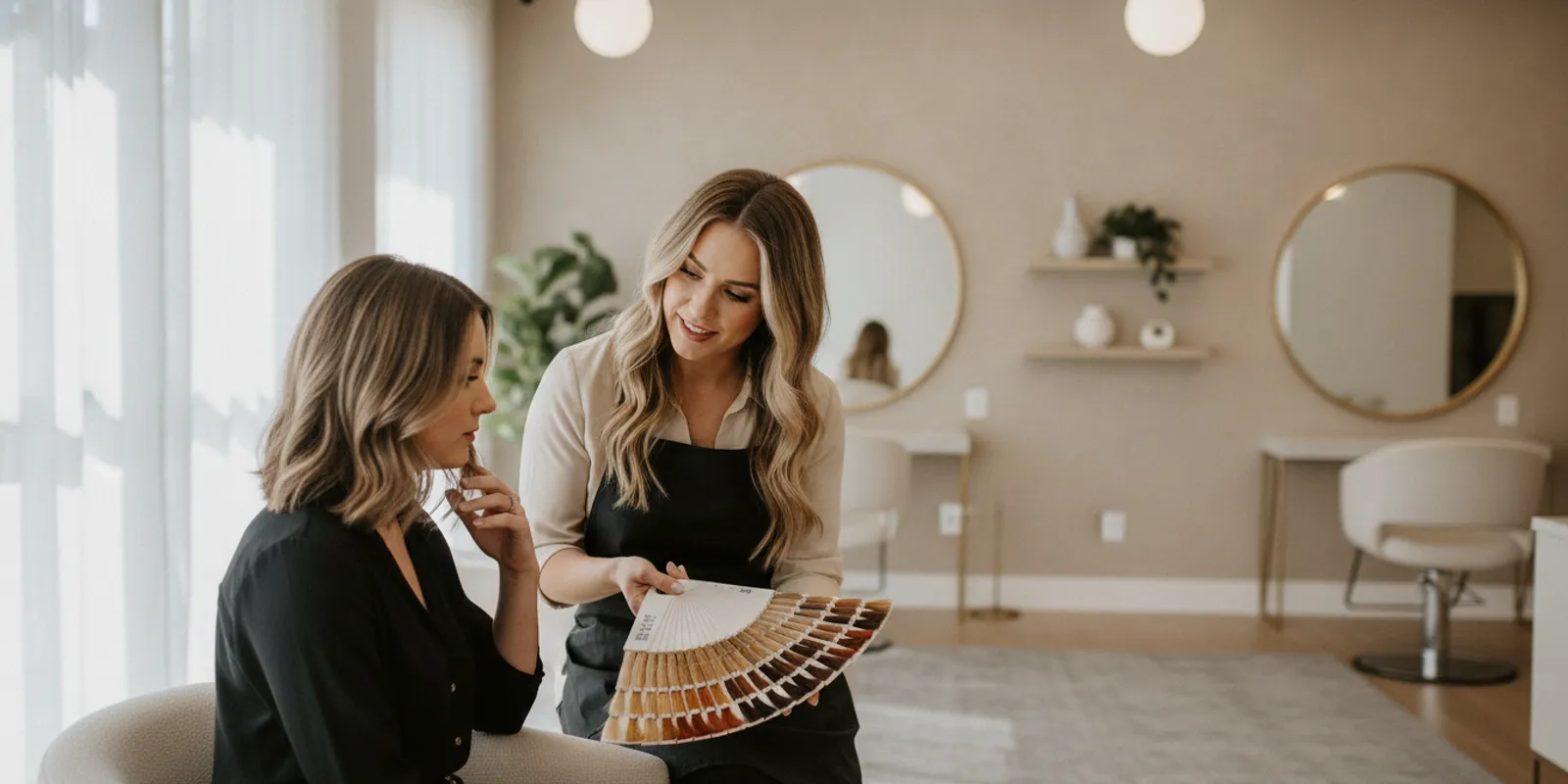
Colorist and client reviewing hair color swatches in a Houston salon

A hair color chart can make shade selection feel simple: find a color that looks right, then ask for it by name. In practice, a chart is a starting point, not a promise of the exact result. Levels and tone families can help you describe what you like, while a consultation helps a colorist account for your starting shade, previous color, hair condition, and goals. This guide explains how to use a chart as a useful visual reference without treating a printed swatch or digital image as a formula.

Request a color consultation

What does a hair color chart show?

Most salon color charts organize shades along two broad dimensions: depth and tone. Depth describes how light or dark a shade appears. Tone describes the color family or reflect visible within that depth. A chart may use numbers, letters, names, or a combination. The exact system varies by professional color line, so a code on one chart may not map exactly to a code on another.

Think of the chart as a shared visual vocabulary. It can help you communicate that you prefer a deeper brunette, a softer golden effect, or a cooler-looking finish. It cannot predict precisely how a shade will appear on every head of hair. The result depends on the canvas underneath it and on the color process selected by the professional.

A chart is most useful when you use it to narrow a direction rather than demand a precise match. You might point to a depth you like and say, “I want to stay around this darkness, but I prefer a softer, less golden tone.” That gives a colorist two useful pieces of information while leaving room to assess your current hair and discuss the right route.

How do you read the level of a hair color chart?

Level usually describes depth, from darker shades to lighter shades. Some charts use a numbered scale, but the endpoints and increments can differ by brand. A low number often represents a darker depth and higher numbers a lighter one, yet you should confirm the key on the chart you are viewing rather than assume all systems are identical.

When looking at a level, focus on the overall depth rather than a single strand in a photograph. Ask yourself whether you want to stay close to your current depth, go darker, or explore a lighter look. You do not need to name a level accurately. A description such as “one step lighter than my current brunette” is a useful starting point for conversation.

Why is the level only part of the decision?

Two shades at a similar depth can look very different if their tones differ. A medium brown with a warm reflect does not read like a medium brown with a cool reflect. Likewise, a lighter shade may look beige, golden, coppery, or ashy depending on its tone and the light in which you see it.

Also consider how much contrast you want. A uniform all-over shade, dimensional highlights, and balayage can create different visual effects even when the colors appear similar on a chart. A colorist can discuss which service approach suits your goal and the condition of your hair.

Use level language as an approximate comparison, not a measurement you have to get right. If you show a picture, explain whether you like the overall depth, the brightness around the face, or the contrast between lighter and darker pieces. These are separate design choices. A reference can be useful even when your hair is a different length, texture, or starting color, as long as you identify the detail you want to discuss.

What do tone names and letters mean?

Charts may use words such as ash, beige, gold, copper, red, or neutral. Some use letters or symbols instead. These labels describe a tone family, but the precise meaning depends on the color line. “Ash,” for instance, is not a universal formula, nor does it guarantee that the finished hair will look gray or eliminate every unwanted warm cast.

When you are drawn to a tone, describe the effect you want in ordinary language. You might say that you prefer a soft, natural-looking brunette, want warmth around the face, or would like less obvious contrast as the shade grows out. Bring a few reference images if helpful, and explain which details you like in each. One photo may show the depth you want while another shows a preferred placement or finish.

  • Warm families: Often include gold, copper, or red reflects. The specific appearance depends on depth and the underlying hair.
  • Cool families: May be labeled ash or with another cool descriptor. They can create a different impression from warm shades at a similar level.
  • Neutral families: Aim for a more balanced effect, though “neutral” still varies by brand and starting canvas.
  • Beige or mixed families: May blend warm and cool qualities. Ask the colorist to explain how that particular line uses the term.

These categories are broad guides, not fixed promises. A colorist may adjust the formula or placement to suit your hair and the result you have in mind. The salon’s hair services page is a useful overview of the service categories to discuss.

How can you describe a tone without relying on a label?

Start with the impression you want the color to create. “Soft and natural,” “more golden,” “less red,” and “a little brighter around my face” are clearer than asking for a term that may mean something different across color lines. If you do use a chart label, pair it with an explanation. For example: “I like this beige family, but I want the finished look to remain subtle rather than very bright.”

It also helps to distinguish what you do not want from what you do want. “I don’t want it to look too warm” gives context, but the colorist still needs to know whether you prefer neutral, cool, or simply less golden. Use a second image or a plain-language comparison to clarify. If you are unsure, say so. A consultation is the place to translate preferences into color terminology.

Why can the same shade look different on different hair?

A swatch is a sample on a particular base. Your hair is its own canvas, shaped by natural pigment, previous color, lightening history, porosity, texture, density, and condition. That is why selecting a box or chart shade by appearance alone can lead to a result that differs from the image.

For example, a chart’s cool brown may appear clean and subdued on one starting canvas but warmer on another. A lighter-looking reference may require lifting existing pigment, while a darker shade may cover or shift what is already there. The right approach depends on your history and the limits of your hair, not just the shade label.

Imagine two clients who both point to the same medium beige-brown swatch. One has natural hair close to that depth. The other has darker hair with several layers of artificial color. The swatch provides a common point of discussion, but the services needed to approach it may differ. The colorist may discuss a subtle adjustment for one person and a more involved, staged plan for the other. The point is not that one result is guaranteed; it is that the starting canvas changes the conversation.

Lighting matters, too. Salon lighting, daylight, and indoor lighting can change how you perceive a tone. Digital images add another variable: screens display color differently, and photographs may be edited. Use charts and images to discuss direction, then rely on an in-person assessment for a more realistic plan. If you compare photos, notice whether they were taken in similar lighting and whether the hair is styled in a way that affects its shine and dimension.

What can photos tell you, and what can they not tell you?

A photo can show the general mood of a look, such as deep and glossy, softly dimensional, or bright around the face. It can also help communicate placement: whether lighter pieces are concentrated near the front, spread through the crown, or blended toward the ends. But a photo cannot tell you the exact formula, application timing, starting canvas, or editing used to produce the image.

Choose a small group of images rather than a large collection of unrelated looks. Three references can be enough if you can explain what each one contributes. For example, one image may show your preferred depth, another your preferred tone, and a third the placement you like. That is more useful than asking for a copy of a photo without discussing how its details relate to your hair.

What should you know about natural and previously colored hair?

Natural hair and previously colored hair do not respond in the same way to every service. A color chart does not reveal what is already present on your strands. If you have colored your hair at home or in a salon, tell the colorist what you remember, including approximate dates and any lightening, glossing, or smoothing services. If details are uncertain, say so; an accurate history is more useful than a confident guess.

Previous color may affect how evenly a new shade develops and whether a more complex correction is appropriate. Color correction is individualized and consultation-based because the colorist needs to assess the current result, your target, and the hair’s condition before outlining a plan. A single appointment may not be the right expectation for every goal.

At Bella Rinova, new color clients complete a consultation before booking a color service. This gives the colorist a chance to understand your starting point and discuss a suitable service plan. You can also review the salon’s color correction service information if your goal involves changing or correcting existing color.

What should you include in a color history?

Think in broad categories, then add dates or details where you remember them. Include professional color, home color, highlights, balayage, toners or glosses, and any lightening you have had. Mention smoothing services as well, because the colorist needs an overall picture of your hair’s service history. You do not need to know product names or technical terms. “I used a home color kit around the holidays, then had highlights in spring” is more helpful than leaving out a service because you do not remember the exact shade.

If your hair has been colored by more than one person, say so. If you have used a product but are unsure whether it was permanent or temporary, state that uncertainty. The purpose is not to judge your choices; it is to avoid building a plan on incomplete assumptions. Photos from previous stages can help show how the color changed, but verbal context remains important.

How can you use a hair color chart before a consultation?

A little preparation makes the conversation more focused. Instead of asking for a chart shade by number alone, use the chart to identify broad preferences and bring the context needed to refine them.

  1. Choose a depth direction. Decide whether you want to stay close to your current shade, go deeper, or explore a lighter look. You do not need to select an exact level.
  2. Describe your preferred tone. Note whether you are drawn to warm, cool, neutral, or blended-looking references. Explain the effect, not only the label.
  3. Collect a small set of reference images. Choose examples that resemble your hair length and starting depth when possible. Identify what you like in each, such as tone, placement, or contrast.
  4. Write down your color history. Include salon services, home color, lightening, and approximate timing. Mention anything you are unsure about.
  5. Consider upkeep. Think about how often you are comfortable returning for maintenance and how you want the color to look as it grows out.
  6. Be open to adjustment. Your colorist may recommend a different shade direction or a staged approach to protect the overall plan for your hair.

It can help to look at a salon gallery for examples of finished work, but treat photos as inspiration rather than a guarantee. Ask what elements of a look are achievable for your starting canvas and what would require a different technique or schedule.

How should you organize your inspiration before the appointment?

Make a short note beside each image: “like this depth,” “prefer this face frame,” or “not this much contrast.” Those notes prevent a single photograph from carrying several meanings. Also include one reference that is close to your current hair, if you can find one. It can help make the discussion concrete, even if it is not your ideal result.

Think about your daily routine as part of the inspiration brief. Do you usually wear your hair straight, curly, up, or air-dried? A color placement can appear different depending on how the hair is worn. Tell the colorist what your normal styling looks like, not only how you plan to style it for a special event.

Which coloring approach might fit your goal?

A chart displays shades, but it does not tell you which application method will create the look you want. All-over color, highlights, and balayage distribute color differently. The best fit depends on your desired dimension, starting color, hair history, and maintenance preferences.

Approach What to discuss Questions to consider
All-over color Whether you want a more consistent overall shade or a change in depth How will my existing color affect the result? What maintenance should I expect?
Highlights Where you want brightness and how much contrast feels right Would partial or fuller placement suit my goal and current color?
Balayage How a softer, more blended placement could work with your cut and texture What tone and placement would complement my starting shade?
Color correction What needs to change and whether the plan should be staged What is realistic for my hair’s history and condition?

This comparison is a conversation guide, not a recommendation for a specific service. Your colorist can assess the hair and explain the options. If you are comparing highlights and all-over color, the salon’s guide to highlights versus all-over color can help you frame the questions you want to ask.

How do you choose between a uniform shade and dimension?

Begin with the visual effect you want to see in everyday lighting. If you prefer your hair to read as one more consistent shade, ask how an all-over approach would interact with your current color. If you like visible variation, ask where dimension could be placed and how much contrast might suit your goal. The exact name of the service matters less than being clear about the appearance you want.

Consider your cut and how you part your hair. Pieces around the face may be more noticeable with one parting or style; dimension through the crown may show differently when the hair is worn up. If you change your part often or wear your hair in several ways, describe that. Placement can be part of the design conversation, not an afterthought.

Color correction is a separate kind of discussion when the current shade needs a significant change or correction. Bring a complete history and ask what can reasonably be approached now, what might need to wait, and how the condition of the hair affects the proposed sequence. The consultation can clarify whether a desired chart shade is a near-term goal or a longer-term direction.

How should maintenance shape your shade choice?

A shade that looks beautiful on the day of the appointment should also fit your routine. Consider how visible regrowth may be, whether you want to preserve dimension, and how often you are willing to return for professional upkeep. There is no single maintenance schedule for every color; it depends on the technique, amount of contrast, hair growth, and personal preference.

Try a simple planning exercise. Picture your hair several weeks after the appointment, not only immediately after it. Would you be comfortable if the roots became more noticeable? Would you prefer a blended transition? Are you willing to revisit the salon to maintain brightness or a more uniform shade? These answers help the colorist understand what “low upkeep” or “fresh” means to you.

Houston’s humidity and active outdoor routines may also influence how you style and care for your hair, but climate does not determine a particular chart shade. Discuss how you typically wear your hair and what your daily routine looks like. The colorist can factor those preferences into the placement and care conversation.

Ask about home care using products the salon carries, rather than assuming that every product recommendation suits every color or hair type. You can browse professional hair care products and ask your stylist which options are appropriate for your individual routine.

What practical details affect upkeep?

  • Regrowth visibility: A higher-contrast change may make the difference between the roots and colored lengths more noticeable to you.
  • Placement: The location and distribution of lighter pieces affect which areas catch the eye as the hair grows.
  • Styling habits: A look designed around waves may read differently when worn straight, and vice versa.
  • Personal schedule: Travel, work, events, and preferred appointment frequency all matter when discussing a plan.
  • Home routine: Ask what care steps are relevant for your color and texture, and which products the salon carries are appropriate.

Do not feel you must choose between an ambitious result and realistic upkeep before you speak with a professional. Explain both. A colorist can discuss whether a different tone, placement, or sequence better fits the time you want to devote to maintenance.

How should you compare two possible shade directions?

When you are torn between two chart choices, compare them against the same set of priorities instead of switching between unrelated pictures. For each option, note the depth, tone, contrast, likely effect on your current hair, and upkeep you would be comfortable with. Then ask which differences are meaningful and which are simply chart or lighting variations.

For example, imagine you are deciding between a deeper neutral brunette and a lighter golden brunette. The first may feel closer to a current darker base, while the second may call for a different service approach depending on your history. Rather than selecting a number, tell the colorist what draws you to each: perhaps you like the polish of the deeper shade but the brightness of the lighter one. The professional can explore whether a balanced direction or dimensional placement addresses both preferences.

A second example is choosing between a cool-looking brown and a beige brown. Look beyond the label. Ask what the chart means by each term, how the tones may appear on your existing hair, and whether the visual difference remains noticeable in natural light. If the distinction is subtle on the chart, it may not be the most important choice compared with placement, contrast, or how much change you want.

You can also make a small decision matrix to organize the conversation:

Question Option A Option B
Which depth feels closer to my goal? Write a plain-language description Write a plain-language description
Which tone or effect do I prefer? Warm, cool, neutral, or mixed Warm, cool, neutral, or mixed
What do I like in the reference? Depth, brightness, placement, or contrast Depth, brightness, placement, or contrast
What is my upkeep comfort? Describe the routine you would accept Describe the routine you would accept
What needs professional assessment? Starting canvas, history, condition Starting canvas, history, condition

This exercise is not a formula and does not predict the finished color. It helps you arrive with a clear comparison so the consultation can focus on what matters to you. If you cannot choose, bring both references and explain why each appeals to you.

What questions should you ask before choosing a shade?

Clear questions help turn an inspiration into a practical plan. You do not need to know color terminology in advance; your colorist can explain the options in plain language.

  • How does my current depth compare with the depth in this reference?
  • Is the tone I like realistic on my starting color in one visit?
  • How does my previous color affect the shade and process?
  • Would all-over color, highlights, or balayage better match the effect I want?
  • What can we do if my hair’s condition makes my first choice unsuitable?
  • How much maintenance might this approach involve, and what could it look like as it grows out?
  • Should the plan be divided into stages, and what would we assess at each step?
  • What should I do at home between appointments?

How can you make the consultation more productive?

Begin with the result you hope to see and the constraints that matter. State your preferred depth or tone, explain the references, and share your service history. Then ask the colorist to reflect the plan back in plain language: what service approach is being discussed, what the first visit is meant to address, and which parts of the goal may require reassessment later.

If you have a special date, mention it early rather than assuming a major change can be completed just before the event. This does not mean every change needs multiple visits; it means the colorist should understand your timing alongside your hair history and desired result. If you are uncertain about commitment, say what you want to avoid, such as frequent maintenance or a dramatic change. That information can help narrow the options.

For an individualized plan, share your color history and goals before scheduling the service. You can contact Bella Rinova to request the required consultation for a new color appointment. The salon has served Houston since 1999 and offers personalized hair services for clients in the River Oaks and Galleria areas.

How can you use a gallery and service pages wisely?

Online service pages and galleries are useful for understanding the kinds of work and services a salon discusses, but they cannot replace an assessment of your hair. Review descriptions to learn which broad category may fit your goal, then bring questions rather than assuming a service name guarantees a particular shade. The salon and spa services overview can help you explore the broader menu, while the salon background provides context about Bella Rinova.

When looking through the salon gallery, note the details that matter to you: depth, tone, face-framing brightness, or blended dimension. Avoid assuming a photo shows the same starting color or hair history as yours. If a result catches your eye, save it and ask what information the colorist would need to assess whether a similar direction is appropriate.

Do not rely on a product page or a color name to decide your formula. Product lines and service techniques are tools used by professionals, not a shortcut around consultation. If you want to know what home care may suit your finished color, discuss your routine and browse only items the salon currently carries. The purpose is to make the in-person conversation more informed, not to self-prescribe a shade or process from a screen.

What should you remember about a hair color chart?

A hair color chart is most useful as a conversation tool. Levels suggest depth, tone labels describe broad color families, and the chart’s own key explains its system. None of those details replaces an assessment of your existing hair and history.

Bring the shades and images that appeal to you, but stay open to a professional recommendation. A thoughtful consultation can translate your preferences into a plan that accounts for your starting color, condition, desired result, and maintenance comfort. You can review Bella Rinova’s hair services and use the contact page to begin the consultation process.

Request a personalized color consultation

With a clear goal and an honest conversation about your hair history, you can use a chart to make your next color discussion more focused and reassuring.

Share:
Salon Hours
Mon: 9AM - 3PM
Tue, Wed, Fri: 9AM - 6PM
Thur: 9AM - 7PM
Sat: 9AM - 4PM
Contact Us
  • (713) 572-0022
  • info@bellarinova.com
  • 4444 Westheimer Rd, Ste H200
    Houston, TX 77027
Bella Rinova is proud to serve clients in the River Oaks, Galleria, and Houston area.
© 2026
Bella Rinova Salon
Built and Powered by Salon.Marketing

Appointment Request

"*" indicates required fields

This field is for validation purposes and should be left unchanged.

Request Appointment

"*" indicates required fields

This field is for validation purposes and should be left unchanged.

Houston Hair Color Appointment Timeline

Colorist and client reviewing hair color swatches in a Houston salon

A hair color chart can make shade selection feel simple: find a color that looks right, then ask for it by name. In practice, a chart is a starting point, not a promise of the exact result. Levels and tone families can help you describe what you like, while a consultation helps a colorist account for your starting shade, previous color, hair condition, and goals. This guide explains how to use a chart as a useful visual reference without treating a printed swatch or digital image as a formula.

Request a color consultation

What does a hair color chart show?

Most salon color charts organize shades along two broad dimensions: depth and tone. Depth describes how light or dark a shade appears. Tone describes the color family or reflect visible within that depth. A chart may use numbers, letters, names, or a combination. The exact system varies by professional color line, so a code on one chart may not map exactly to a code on another.

Think of the chart as a shared visual vocabulary. It can help you communicate that you prefer a deeper brunette, a softer golden effect, or a cooler-looking finish. It cannot predict precisely how a shade will appear on every head of hair. The result depends on the canvas underneath it and on the color process selected by the professional.

A chart is most useful when you use it to narrow a direction rather than demand a precise match. You might point to a depth you like and say, “I want to stay around this darkness, but I prefer a softer, less golden tone.” That gives a colorist two useful pieces of information while leaving room to assess your current hair and discuss the right route.

How do you read the level of a hair color chart?

Level usually describes depth, from darker shades to lighter shades. Some charts use a numbered scale, but the endpoints and increments can differ by brand. A low number often represents a darker depth and higher numbers a lighter one, yet you should confirm the key on the chart you are viewing rather than assume all systems are identical.

When looking at a level, focus on the overall depth rather than a single strand in a photograph. Ask yourself whether you want to stay close to your current depth, go darker, or explore a lighter look. You do not need to name a level accurately. A description such as “one step lighter than my current brunette” is a useful starting point for conversation.

Why is the level only part of the decision?

Two shades at a similar depth can look very different if their tones differ. A medium brown with a warm reflect does not read like a medium brown with a cool reflect. Likewise, a lighter shade may look beige, golden, coppery, or ashy depending on its tone and the light in which you see it.

Also consider how much contrast you want. A uniform all-over shade, dimensional highlights, and balayage can create different visual effects even when the colors appear similar on a chart. A colorist can discuss which service approach suits your goal and the condition of your hair.

Use level language as an approximate comparison, not a measurement you have to get right. If you show a picture, explain whether you like the overall depth, the brightness around the face, or the contrast between lighter and darker pieces. These are separate design choices. A reference can be useful even when your hair is a different length, texture, or starting color, as long as you identify the detail you want to discuss.

What do tone names and letters mean?

Charts may use words such as ash, beige, gold, copper, red, or neutral. Some use letters or symbols instead. These labels describe a tone family, but the precise meaning depends on the color line. “Ash,” for instance, is not a universal formula, nor does it guarantee that the finished hair will look gray or eliminate every unwanted warm cast.

When you are drawn to a tone, describe the effect you want in ordinary language. You might say that you prefer a soft, natural-looking brunette, want warmth around the face, or would like less obvious contrast as the shade grows out. Bring a few reference images if helpful, and explain which details you like in each. One photo may show the depth you want while another shows a preferred placement or finish.

  • Warm families: Often include gold, copper, or red reflects. The specific appearance depends on depth and the underlying hair.
  • Cool families: May be labeled ash or with another cool descriptor. They can create a different impression from warm shades at a similar level.
  • Neutral families: Aim for a more balanced effect, though “neutral” still varies by brand and starting canvas.
  • Beige or mixed families: May blend warm and cool qualities. Ask the colorist to explain how that particular line uses the term.

These categories are broad guides, not fixed promises. A colorist may adjust the formula or placement to suit your hair and the result you have in mind. The salon’s hair services page is a useful overview of the service categories to discuss.

How can you describe a tone without relying on a label?

Start with the impression you want the color to create. “Soft and natural,” “more golden,” “less red,” and “a little brighter around my face” are clearer than asking for a term that may mean something different across color lines. If you do use a chart label, pair it with an explanation. For example: “I like this beige family, but I want the finished look to remain subtle rather than very bright.”

It also helps to distinguish what you do not want from what you do want. “I don’t want it to look too warm” gives context, but the colorist still needs to know whether you prefer neutral, cool, or simply less golden. Use a second image or a plain-language comparison to clarify. If you are unsure, say so. A consultation is the place to translate preferences into color terminology.

Why can the same shade look different on different hair?

A swatch is a sample on a particular base. Your hair is its own canvas, shaped by natural pigment, previous color, lightening history, porosity, texture, density, and condition. That is why selecting a box or chart shade by appearance alone can lead to a result that differs from the image.

For example, a chart’s cool brown may appear clean and subdued on one starting canvas but warmer on another. A lighter-looking reference may require lifting existing pigment, while a darker shade may cover or shift what is already there. The right approach depends on your history and the limits of your hair, not just the shade label.

Imagine two clients who both point to the same medium beige-brown swatch. One has natural hair close to that depth. The other has darker hair with several layers of artificial color. The swatch provides a common point of discussion, but the services needed to approach it may differ. The colorist may discuss a subtle adjustment for one person and a more involved, staged plan for the other. The point is not that one result is guaranteed; it is that the starting canvas changes the conversation.

Lighting matters, too. Salon lighting, daylight, and indoor lighting can change how you perceive a tone. Digital images add another variable: screens display color differently, and photographs may be edited. Use charts and images to discuss direction, then rely on an in-person assessment for a more realistic plan. If you compare photos, notice whether they were taken in similar lighting and whether the hair is styled in a way that affects its shine and dimension.

What can photos tell you, and what can they not tell you?

A photo can show the general mood of a look, such as deep and glossy, softly dimensional, or bright around the face. It can also help communicate placement: whether lighter pieces are concentrated near the front, spread through the crown, or blended toward the ends. But a photo cannot tell you the exact formula, application timing, starting canvas, or editing used to produce the image.

Choose a small group of images rather than a large collection of unrelated looks. Three references can be enough if you can explain what each one contributes. For example, one image may show your preferred depth, another your preferred tone, and a third the placement you like. That is more useful than asking for a copy of a photo without discussing how its details relate to your hair.

What should you know about natural and previously colored hair?

Natural hair and previously colored hair do not respond in the same way to every service. A color chart does not reveal what is already present on your strands. If you have colored your hair at home or in a salon, tell the colorist what you remember, including approximate dates and any lightening, glossing, or smoothing services. If details are uncertain, say so; an accurate history is more useful than a confident guess.

Previous color may affect how evenly a new shade develops and whether a more complex correction is appropriate. Color correction is individualized and consultation-based because the colorist needs to assess the current result, your target, and the hair’s condition before outlining a plan. A single appointment may not be the right expectation for every goal.

At Bella Rinova, new color clients complete a consultation before booking a color service. This gives the colorist a chance to understand your starting point and discuss a suitable service plan. You can also review the salon’s color correction service information if your goal involves changing or correcting existing color.

What should you include in a color history?

Think in broad categories, then add dates or details where you remember them. Include professional color, home color, highlights, balayage, toners or glosses, and any lightening you have had. Mention smoothing services as well, because the colorist needs an overall picture of your hair’s service history. You do not need to know product names or technical terms. “I used a home color kit around the holidays, then had highlights in spring” is more helpful than leaving out a service because you do not remember the exact shade.

If your hair has been colored by more than one person, say so. If you have used a product but are unsure whether it was permanent or temporary, state that uncertainty. The purpose is not to judge your choices; it is to avoid building a plan on incomplete assumptions. Photos from previous stages can help show how the color changed, but verbal context remains important.

How can you use a hair color chart before a consultation?

A little preparation makes the conversation more focused. Instead of asking for a chart shade by number alone, use the chart to identify broad preferences and bring the context needed to refine them.

  1. Choose a depth direction. Decide whether you want to stay close to your current shade, go deeper, or explore a lighter look. You do not need to select an exact level.
  2. Describe your preferred tone. Note whether you are drawn to warm, cool, neutral, or blended-looking references. Explain the effect, not only the label.
  3. Collect a small set of reference images. Choose examples that resemble your hair length and starting depth when possible. Identify what you like in each, such as tone, placement, or contrast.
  4. Write down your color history. Include salon services, home color, lightening, and approximate timing. Mention anything you are unsure about.
  5. Consider upkeep. Think about how often you are comfortable returning for maintenance and how you want the color to look as it grows out.
  6. Be open to adjustment. Your colorist may recommend a different shade direction or a staged approach to protect the overall plan for your hair.

It can help to look at a salon gallery for examples of finished work, but treat photos as inspiration rather than a guarantee. Ask what elements of a look are achievable for your starting canvas and what would require a different technique or schedule.

How should you organize your inspiration before the appointment?

Make a short note beside each image: “like this depth,” “prefer this face frame,” or “not this much contrast.” Those notes prevent a single photograph from carrying several meanings. Also include one reference that is close to your current hair, if you can find one. It can help make the discussion concrete, even if it is not your ideal result.

Think about your daily routine as part of the inspiration brief. Do you usually wear your hair straight, curly, up, or air-dried? A color placement can appear different depending on how the hair is worn. Tell the colorist what your normal styling looks like, not only how you plan to style it for a special event.

Which coloring approach might fit your goal?

A chart displays shades, but it does not tell you which application method will create the look you want. All-over color, highlights, and balayage distribute color differently. The best fit depends on your desired dimension, starting color, hair history, and maintenance preferences.

Approach What to discuss Questions to consider
All-over color Whether you want a more consistent overall shade or a change in depth How will my existing color affect the result? What maintenance should I expect?
Highlights Where you want brightness and how much contrast feels right Would partial or fuller placement suit my goal and current color?
Balayage How a softer, more blended placement could work with your cut and texture What tone and placement would complement my starting shade?
Color correction What needs to change and whether the plan should be staged What is realistic for my hair’s history and condition?

This comparison is a conversation guide, not a recommendation for a specific service. Your colorist can assess the hair and explain the options. If you are comparing highlights and all-over color, the salon’s guide to highlights versus all-over color can help you frame the questions you want to ask.

How do you choose between a uniform shade and dimension?

Begin with the visual effect you want to see in everyday lighting. If you prefer your hair to read as one more consistent shade, ask how an all-over approach would interact with your current color. If you like visible variation, ask where dimension could be placed and how much contrast might suit your goal. The exact name of the service matters less than being clear about the appearance you want.

Consider your cut and how you part your hair. Pieces around the face may be more noticeable with one parting or style; dimension through the crown may show differently when the hair is worn up. If you change your part often or wear your hair in several ways, describe that. Placement can be part of the design conversation, not an afterthought.

Color correction is a separate kind of discussion when the current shade needs a significant change or correction. Bring a complete history and ask what can reasonably be approached now, what might need to wait, and how the condition of the hair affects the proposed sequence. The consultation can clarify whether a desired chart shade is a near-term goal or a longer-term direction.

How should maintenance shape your shade choice?

A shade that looks beautiful on the day of the appointment should also fit your routine. Consider how visible regrowth may be, whether you want to preserve dimension, and how often you are willing to return for professional upkeep. There is no single maintenance schedule for every color; it depends on the technique, amount of contrast, hair growth, and personal preference.

Try a simple planning exercise. Picture your hair several weeks after the appointment, not only immediately after it. Would you be comfortable if the roots became more noticeable? Would you prefer a blended transition? Are you willing to revisit the salon to maintain brightness or a more uniform shade? These answers help the colorist understand what “low upkeep” or “fresh” means to you.

Houston’s humidity and active outdoor routines may also influence how you style and care for your hair, but climate does not determine a particular chart shade. Discuss how you typically wear your hair and what your daily routine looks like. The colorist can factor those preferences into the placement and care conversation.

Ask about home care using products the salon carries, rather than assuming that every product recommendation suits every color or hair type. You can browse professional hair care products and ask your stylist which options are appropriate for your individual routine.

What practical details affect upkeep?

  • Regrowth visibility: A higher-contrast change may make the difference between the roots and colored lengths more noticeable to you.
  • Placement: The location and distribution of lighter pieces affect which areas catch the eye as the hair grows.
  • Styling habits: A look designed around waves may read differently when worn straight, and vice versa.
  • Personal schedule: Travel, work, events, and preferred appointment frequency all matter when discussing a plan.
  • Home routine: Ask what care steps are relevant for your color and texture, and which products the salon carries are appropriate.

Do not feel you must choose between an ambitious result and realistic upkeep before you speak with a professional. Explain both. A colorist can discuss whether a different tone, placement, or sequence better fits the time you want to devote to maintenance.

How should you compare two possible shade directions?

When you are torn between two chart choices, compare them against the same set of priorities instead of switching between unrelated pictures. For each option, note the depth, tone, contrast, likely effect on your current hair, and upkeep you would be comfortable with. Then ask which differences are meaningful and which are simply chart or lighting variations.

For example, imagine you are deciding between a deeper neutral brunette and a lighter golden brunette. The first may feel closer to a current darker base, while the second may call for a different service approach depending on your history. Rather than selecting a number, tell the colorist what draws you to each: perhaps you like the polish of the deeper shade but the brightness of the lighter one. The professional can explore whether a balanced direction or dimensional placement addresses both preferences.

A second example is choosing between a cool-looking brown and a beige brown. Look beyond the label. Ask what the chart means by each term, how the tones may appear on your existing hair, and whether the visual difference remains noticeable in natural light. If the distinction is subtle on the chart, it may not be the most important choice compared with placement, contrast, or how much change you want.

You can also make a small decision matrix to organize the conversation:

Question Option A Option B
Which depth feels closer to my goal? Write a plain-language description Write a plain-language description
Which tone or effect do I prefer? Warm, cool, neutral, or mixed Warm, cool, neutral, or mixed
What do I like in the reference? Depth, brightness, placement, or contrast Depth, brightness, placement, or contrast
What is my upkeep comfort? Describe the routine you would accept Describe the routine you would accept
What needs professional assessment? Starting canvas, history, condition Starting canvas, history, condition

This exercise is not a formula and does not predict the finished color. It helps you arrive with a clear comparison so the consultation can focus on what matters to you. If you cannot choose, bring both references and explain why each appeals to you.

What questions should you ask before choosing a shade?

Clear questions help turn an inspiration into a practical plan. You do not need to know color terminology in advance; your colorist can explain the options in plain language.

  • How does my current depth compare with the depth in this reference?
  • Is the tone I like realistic on my starting color in one visit?
  • How does my previous color affect the shade and process?
  • Would all-over color, highlights, or balayage better match the effect I want?
  • What can we do if my hair’s condition makes my first choice unsuitable?
  • How much maintenance might this approach involve, and what could it look like as it grows out?
  • Should the plan be divided into stages, and what would we assess at each step?
  • What should I do at home between appointments?

How can you make the consultation more productive?

Begin with the result you hope to see and the constraints that matter. State your preferred depth or tone, explain the references, and share your service history. Then ask the colorist to reflect the plan back in plain language: what service approach is being discussed, what the first visit is meant to address, and which parts of the goal may require reassessment later.

If you have a special date, mention it early rather than assuming a major change can be completed just before the event. This does not mean every change needs multiple visits; it means the colorist should understand your timing alongside your hair history and desired result. If you are uncertain about commitment, say what you want to avoid, such as frequent maintenance or a dramatic change. That information can help narrow the options.

For an individualized plan, share your color history and goals before scheduling the service. You can contact Bella Rinova to request the required consultation for a new color appointment. The salon has served Houston since 1999 and offers personalized hair services for clients in the River Oaks and Galleria areas.

How can you use a gallery and service pages wisely?

Online service pages and galleries are useful for understanding the kinds of work and services a salon discusses, but they cannot replace an assessment of your hair. Review descriptions to learn which broad category may fit your goal, then bring questions rather than assuming a service name guarantees a particular shade. The salon and spa services overview can help you explore the broader menu, while the salon background provides context about Bella Rinova.

When looking through the salon gallery, note the details that matter to you: depth, tone, face-framing brightness, or blended dimension. Avoid assuming a photo shows the same starting color or hair history as yours. If a result catches your eye, save it and ask what information the colorist would need to assess whether a similar direction is appropriate.

Do not rely on a product page or a color name to decide your formula. Product lines and service techniques are tools used by professionals, not a shortcut around consultation. If you want to know what home care may suit your finished color, discuss your routine and browse only items the salon currently carries. The purpose is to make the in-person conversation more informed, not to self-prescribe a shade or process from a screen.

What should you remember about a hair color chart?

A hair color chart is most useful as a conversation tool. Levels suggest depth, tone labels describe broad color families, and the chart’s own key explains its system. None of those details replaces an assessment of your existing hair and history.

Bring the shades and images that appeal to you, but stay open to a professional recommendation. A thoughtful consultation can translate your preferences into a plan that accounts for your starting color, condition, desired result, and maintenance comfort. You can review Bella Rinova’s hair services and use the contact page to begin the consultation process.

Request a personalized color consultation

With a clear goal and an honest conversation about your hair history, you can use a chart to make your next color discussion more focused and reassuring.

Request an
Appointment

  • Sun -Mon: Closed
    Tues-Fri: 10AM - 6PM
    Sat: 10AM - 9PM